
CRYPTOCURRENCY
Law enforcement, banks warn of money laundering gaps in major US crypto bill
The crypto industry and law enforcement groups are in the midst of a lobbying showdown over the proposed Clarity Act.
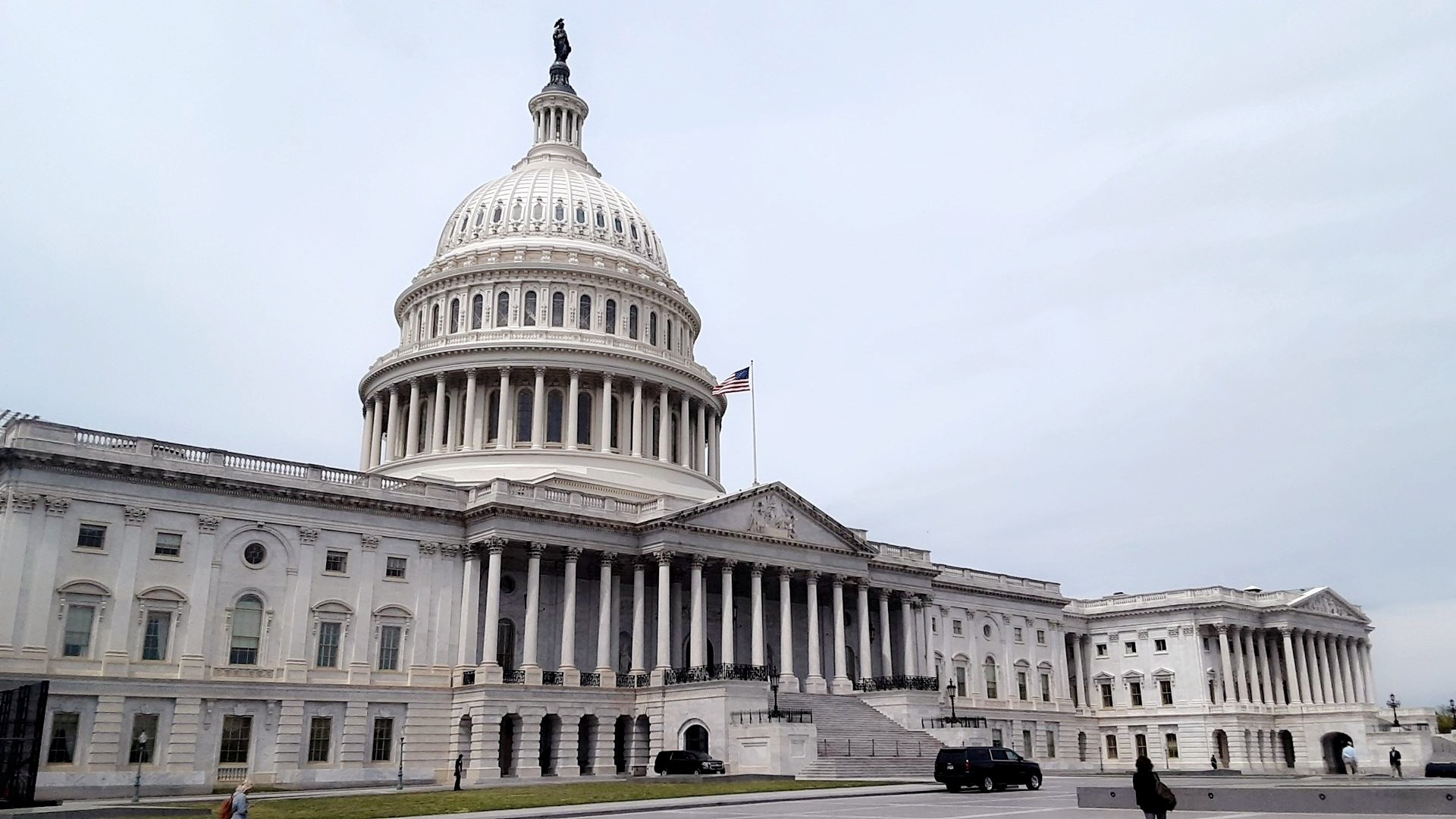
Law enforcement associations, anti-corruption advocates and a major banking group are warning that a new bill aimed at regulating the United States’ cryptocurrency industry could leave big gaps in safeguards against dirty money in digital currencies that have already become a financial vehicle for organized crime.
Known as the Clarity Act, the bill seeks to bring cryptocurrency under a single legal framework on the national level, ending years of the industry operating in gray areas. Crypto companies and President Donald Trump have heavily championed the bill. Defenders of the bill say that it fills a crucial regulatory vacuum and provides law enforcement with new tools to address crime. But critics argue it contains dangerous loopholes and prioritizes studies and pilot programs instead of holding all crypto services to stringent anti-money laundering standards.
This is largely window-dressing type regulation.
— Gary Kalman, executive director of Transparency International U.S.
In recent months, law enforcement groups including the National Sheriffs’ Association and the National Association of Assistant U.S. Attorneys have sent letters to lawmakers voicing a common concern: They argue that the bill could create regulatory exemptions for certain decentralized and automated cryptocurrency services that criminals often rely on to obfuscate their fund flows.
Yesterday, four law enforcement groups representing police chiefs, sheriffs and prosecutors told the acting U.S. Attorney General that, despite discussions with senior officials across the Trump administration, their concern that the bill’s “broad exemptions could create gaps in oversight and accountability that sophisticated criminal actors may exploit” remains unresolved. The letter said its signatories represent more than 70,000 law enforcement professionals across the U.S.
“Criminal organizations increasingly utilize digital assets to facilitate and conceal unlawful activity, including narcotics trafficking, fraud, child exploitation, ransomware attacks, sanctions evasion, terrorism financing, organized retail crime, and other forms of transnational criminal activity,” the letter states, pointing to exemptions for some decentralized businesses. “Regulatory certainty should not come at the expense of accountability, transparency, victim protection, or public safety.”
Key industry players disagree with these groups’ criticisms of the bill. The bill’s alleged loophole for decentralized services “does not exist,” Robin Cook, the director of U.S. Policy at the crypto giant Coinbase, told ICIJ in an interview. Cook points to a section 301 of the bill that he says will in fact bring most automated trading protocols under traditional anti-money laundering requirements.
“It is bringing new regulation at the federal level where there isn’t any today,” Cook told ICIJ. “That is not a deregulatory bill. The idea that somehow this is deregulatory is demonstrably false.”
The Coin Laundry, an investigation by the International Consortium of Investigative Journalists and 37 partner publications, found that criminals and other suspect actors commonly relied on decentralized trading protocols that can help make financial trails harder for law enforcement to trace.

ICIJ examined hundreds of millions of dollars worth of cryptocurrency linked to alleged scammers or North Korean hackers moving through decentralized protocols, where suspect transfers and legitimate funds can interact or mix together in systems that move vast sums of crypto. Some of these automated trading services are known to conduct sparse identity checks of users and some of these services can be more difficult to trace funds through than others.
These swapping services can make it harder for compliance staff at exchanges to determine the origin of crypto assets sent through them when monitoring transactions for suspicious activity. “After the money comes out of the swaps, most exchanges treat it as clean money,” John Griffin, a University of Texas professor who has studied illicit finance in cryptocurrency, told ICIJ last year. “[This] gives them plausible deniability.”
Crypto industry responds
The Clarity Act has been the subject of significant lobbying efforts this year, according to Open Secrets, a nonprofit organization that tracks political spending. This data shows that Coinbase, an outspoken proponent of the legislation, is one of the top filers of lobbying disclosure reports relating to the bill. A number of crypto firms associated with automated trading protocols also have hired lobbyists in relation to the bill.
In an apparent response to pushback against parts of the Clarity Act from law enforcement, a crypto industry group this month sent what it described on its website as a “Blockchain Association Letter From Law Enforcement” to the Senate, with various high-profile former law enforcement signatories backing the bill as it currently stands. These signatories included former FBI special agents, former federal prosecutors and a former chief of the Justice Department’s money laundering section.
The vast majority of officials on the letter’s first several pages featuring its highest profile signatories currently work at major crypto firms, including 11 signatories who now work at Coinbase and two signatories who work at OKX, according to an analysis of online profiles. The letter identified these signatories as Blockchain Association members but does not name the current company affiliation of these officials.
The letter argued that the bill is an important step forward because, among other things, it subjects cryptocurrency exchanges and brokers to mainstream anti-money laundering laws and creates transaction monitoring and reporting requirements for cryptocurrency ATMs, which are known to be prone to use by scammers. The letter also points out that the bill makes it easier for crypto firms to place temporary holds on suspicious transactions, a step that can benefit scam victims.
The Blockchain Association told ICIJ that its letter “clearly identified the signatories who work at Blockchain Association member companies.”
“Years of public service and frontline experience investigating crime, prosecuting bad actors, and protecting national security are exactly what make these signatories relevant voices on this issue,” a spokesperson for the Blockchain Association said in an email. “Providing clear, workable rules can only strengthen compliance and accountability.”
Last summer, the U.S. House of Representatives approved its version of the Clarity Act with bipartisan support.
‘Illicit finance-friendly’
While there is broad agreement on the need for a legal framework, law enforcement and anti-corruption advocates have cited multiple concerns with the proposed legislation, including what they say are insufficient consumer protections for fraud-prone crypto ATMs, lax screening requirements for secretive self-hosted wallet transfers, and loopholes that would make it too easy for companies with operations offshore to skirt U.S. laws.
The Bank Policy Institute, a group representing major U.S. banks, echoed law enforcement concerns about what they say are inconsistent standards and regulatory holes in the bill. In a publication on its website last week, BPI said the bill should ensure that all crypto services are subject to the same anti-money laundering rules when they perform similar activities. The group urged lawmakers to grant the Secretary of the Treasury “clear authority” to regulate “mixers, tumblers and other blockchain applications that facilitate money laundering, terrorist financing, and sanctions evasion.”
“These gaps are not innovation-friendly; they are illicit finance-friendly,” the statement said. “If Congress wants an effective market structure framework, it must close these gaps.”
In a Truth Social post in March, President Trump accused the banking industry of trying to block crypto legislation and said “the Banks” should not “hold the Clarity Act hostage.”
“The Banks are hitting record profits, and we are not going to allow them to undermine our powerful Crypto Agenda that will end up going to China, and other Countries if we don’t get The Clarity Act taken care of,” Trump wrote.
Gary Kalman, executive director of advocacy group Transparency International U.S., which has also lobbied Congress on the bill, said that the Clarity Act in its current form could create a false perception of meaningful action. “By doing this light-touch regulation, people are going to say ‘this is regulated so it’s safer now,’” Kalman told ICIJ. “But this is largely window-dressing type regulation.”