A quiet move by the Trump administration is allowing major crypto firms to skirt U.S. state regulators that have, for years, played a key role in policing dirty money in the industry.
Following a recent reinterpretation of banking rules, federal authorities have granted some crypto companies special, slimmed-down national banking licenses that come with minimal federal oversight and immunity against a wide range of actions by state regulators.
The sudden loss of state authority over some major crypto firms shocked Linda Conti, superintendent of Maine’s Bureau of Consumer Credit Protection, which oversees licensing of money-transmitting firms.
“We will not be able to address consumer complaints,” Conti told the International Consortium of Investigative Journalists in an email. “We will not be able to ask any questions of these entities.”
After a surge in cryptocurrency scams, Maine began requiring crypto firms to verify the ownership of certain digital wallets their customers were sending money to. The rule was intended to prevent would-be victims from paying scammers, but Coinbase, one of the world’s largest crypto players, cried foul.
In a letter asking federal authorities to intervene last September, the crypto exchange suggested Maine’s new rule was unconstitutional and “threatens the very purpose” of core features of cryptocurrency that offer users deep privacy. Coinbase has since converted to a national trust charter bank, meaning it will no longer need to comply with this rule in Maine, according to Conti.
Coinbase is not alone in obtaining the new licenses that can curtail state action.
Through a records request, ICIJ obtained a letter to Conti’s office from the crypto firm Fidelity Digital Assets, which recently converted to a national trust charter bank, telling local regulators that the company no longer needed its state money transmission license. In the letter, lawyers representing the crypto firm requested that Maine update Fidelity Digital Assets’ license in Maine to “Terminated – Surrendered / Canceled.”
Fidelity Digital Assets, the cryptocurrency arm of the investment management giant Fidelity, did not provide comment for this story.



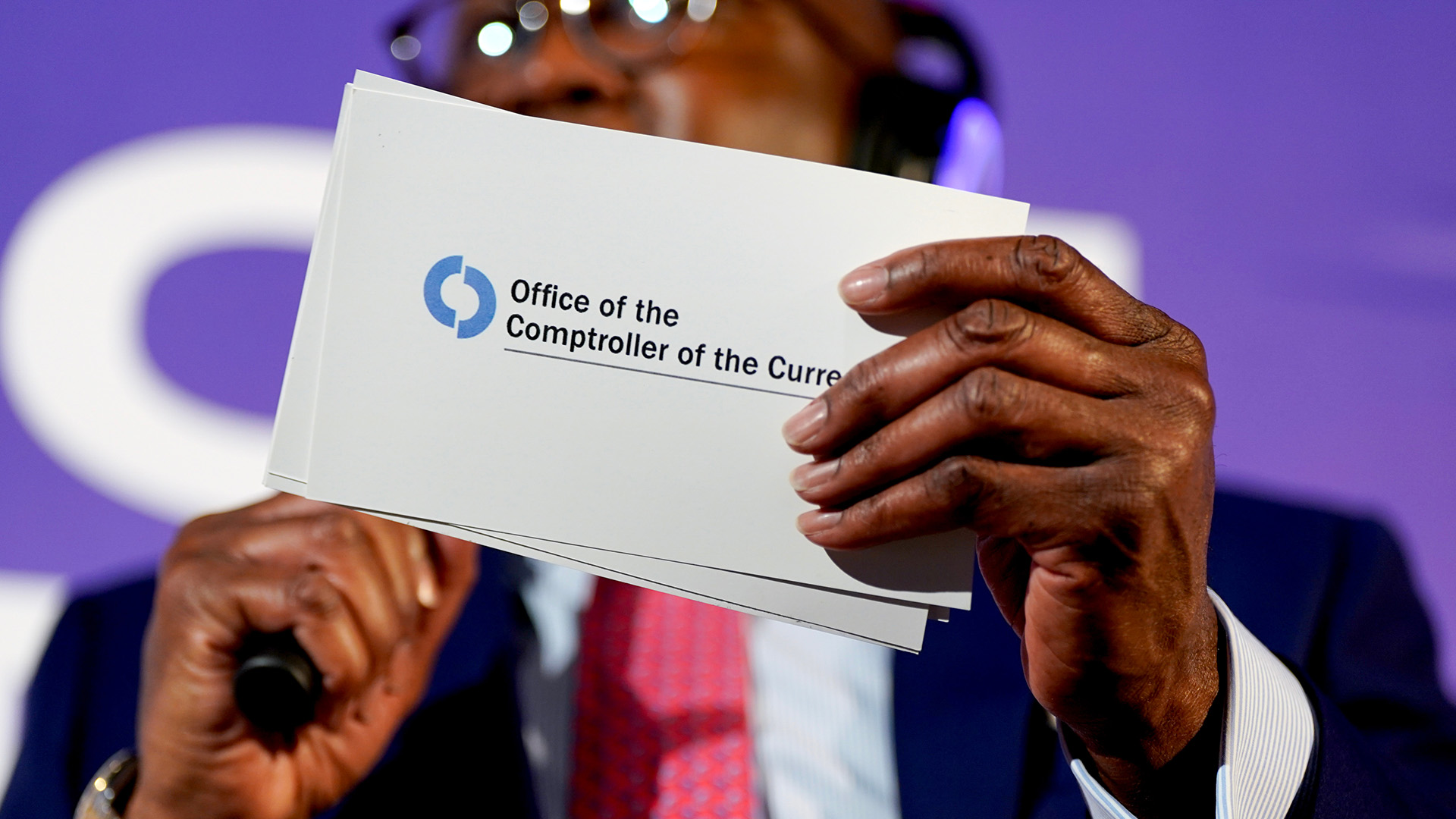
National trust charter banks are not new. Previously, these charters had been granted to entities such as investment managers and private equity funds that don’t engage in regular banking activity. But a recent reinterpretation of federal rules by the Office of the Comptroller of the Currency (OCC), a U.S. federal banking regulator, has allowed these charters to become available to crypto firms, affording them greater access to the formal financial system and exemption from many state rules.
Traditional banks are overseen by a consortium of regulators that can include the OCC, the Federal Reserve, the Federal Deposit Insurance Corporation and state regulators as well. In contrast, national trust charter banks are generally overseen by the OCC as their sole regulator.
The federal government’s opening of national trust charters to crypto firms has frustrated the traditional banking industry. In March, The Guardian reported that the Bank Policy Institute, which represents dozens of major banks, was considering suing the OCC over the decision. The group said that giving charters to crypto firms would create an “unlevel playing field” and “could significantly increase risks to the U.S. financial system.”
The Conference of State Bank Supervisors, a national organization of state financial regulators, has also slammed the move. The crypto firms “would fall outside the scope of core federal banking laws,” the organization said in a February letter to the OCC. The move, the letter said, creates “a potential risk of tremendous harm to consumers by enabling such institutions to assert that they are entitled to immunity, through federal preemption, from critical consumer protections afforded under state law.”
One of the first crypto firms to receive conditional approval for a trust charter from the OCC last year was Paxos Trust. Months before this approval, Paxos settled with the New York Department of Financial Services, which found systemic failures in the firm’s anti-money laundering program. As part of the settlement, Paxos committed more than $40 million to pay penalties and to improve its compliance program.
Just a few months later, Paxos shed its New York State license. Experts told ICIJ that the move will likely reduce New York authorities’ ability to enforce Paxos’ promised changes to its compliance program. Pamela Clegg, an anti-money laundering expert who has worked in compliance roles at traditional banks and crypto firms, says that Paxos’ surrendering of its state license “absolutely takes some of the teeth out of the settlement’s long-term impact.”
Paxos and the New York Department of Financial Services did not provide comment for this story. The OCC’s conditional approval of Paxos’ federal charter requires the firm to set aside millions for compliance required by its settlement with state authorities. Both Paxos and Fidelity Digital Assets no longer appear on New York State’s list of firms licensed as cryptocurrency services.
In an April press release, Coinbase said it would keep its license with New York’s Department of Financial Services, a regulator the firm said it has worked with in the past.
Even before the advent of cryptocurrency, U.S. financial institutions used evolving interpretations of federal rules to ditch their state regulators. According to past critics of the practice, this proved catastrophic in the lead-up to the 2008 financial crisis as mortgage lenders, newly free of state oversight, began taking on riskier loans. “The last time the national banks were granted broad exemption from state enforcement authority, we ended up with a global economic crisis on our hands,” Lisa Madigan, Illinois’ then-attorney general, told lawmakers in 2010. “We must not let that happen again.”
Clegg, the crypto compliance specialist, said she knows from experience why crypto firms are jumping at the OCC charters. “State regulators play an important role, but today crypto exchanges are effectively managing 50 different compliance regimes at once,” Clegg told ICIJ in an email. “That creates a costly, duplicative, and near-constant cycle of licensing, exams, and audits across jurisdictions.”
According to Conti, the Maine financial regulator, Coinbase and other firms operating with national trust charters will no longer need to comply with the state’s anti-scam rule identifying owners of certain crypto wallets. Conti said that an initial rule was repealed and replaced with a narrower rule that requires crypto firms only to verify the wallet ownership of people trying to send digital currency to themselves. This is to fight common scams where crypto users think they are funding their own investment account but, in reality, are sending money to scammers.
Coinbase did not provide comment for this story.
Conti said she is concerned by the removal of oversight from state offices that are intimately familiar with the challenges their residents face.
“And the sad part is, consumers do not even know this is coming,” she said. “People do not know that their local place to complain about a crypto issue is now Washington, D.C.”