Europe must take a coordinated response to fight the rising threat of transnational repression, according to a group of experts commissioned by the European Parliament to investigate ways to counter this emerging form of cross-border authoritarian coercion.
A new study commissioned by the European Parliament, which cites ICIJ’s China Targets investigation, details a set of policy recommendations for the European Union and its member states aimed at closing gaps in protection and accountability.
Chief among recommendations are the development of an EU-wide definition of transnational repression, the creation of an internal data collection and knowledge hub on the issue within the bloc, and strengthened communication channels between member states’ law enforcement agencies.
“There is a need, broadly speaking, that there be more and better data collection on transnational repression, whether it is done at the multilateral or state level,” Nate Schenkkan, the lead author of the report, told ICIJ. “The knowledge drives action, so collecting the information and disseminating it is part of the process and policy framework of forcing those other stakeholders to address the issues.”
The report recommends strengthening data protection clauses in EU laws, including identifying transnational repression as a “systemic risk” that regulated platforms are responsible for under the Digital Services Act. It also calls for more aggressive action to counter transnational repression, including visa bans, the expulsion of diplomats, and swifter mobilization of sanctions.

“Transnational repression bundles a lot of concerns together around human rights, security, and foreign interference,” Alexander Dukalskis, a co-author of the report and assistant professor at the University of Dublin, said via email. “It, of course, infringes on the rights of victims, but it also degrades democratic participation and infringes on sovereignty. Recognizing those overlaps may help facilitate a cohesive response.”
The report cites Freedom House data on acts of transnational repression showing that, between 2014 and 2024, France, Germany and Poland were among the member states where instances of harassment were most frequently recorded. In recent years, the report said, the EU has increasingly become the site of transnational repression by proxy — including by criminal organizations, which are hired to carry out surveillance, harassment or violence.
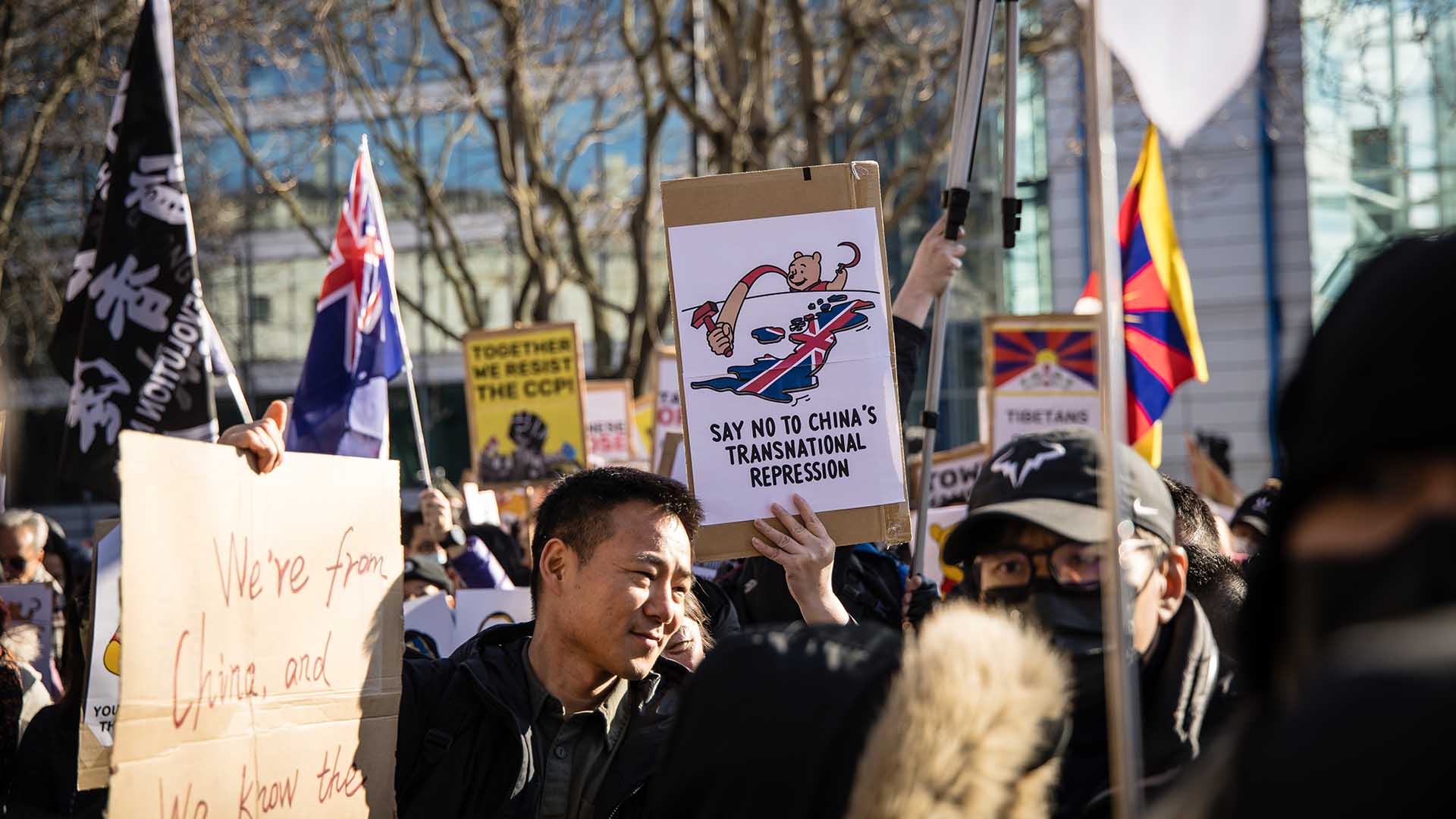
The study highlights an uptick in transnational repression campaigns from China, Russia and Iran, echoing the findings of ICIJ’s April China Targets investigation, which exposed the sprawling scope of Beijing’s campaign to silence criticism abroad.
The investigation revealed how the Chinese government had misused international institutions like the United Nations and Interpol to target overseas dissidents, often without interference from democratic nations. Some of the 105 victims interviewed by ICIJ and its 42 media partners recalled family members being threatened, being doxxed, or having their bank accounts suspended.
China rejects allegations of transnational repression as “groundless” and “fabricated by a handful of countries and organizations to slander China,” Liu Pengyu, a spokesperson for the Chinese Embassy in Washington, D.C., told ICIJ in a statement last year.
The EU has made some progress since China Targets was publishe in April 2025. In November, the European Parliament passed a resolution to create a definition of transnational repression — a key recommendation of the new report, which also advises member states to establish how the issue fits into their existing legal frameworks.
“There’s clearly awareness of transnational repression as an idea,” Schenkkan said. “There is an unclear mandate, though, to work on it. It’s not clear whose responsibility it is or what they’re supposed to do, and without that, people are reluctant to take it up and kind of push forward.”
The report notes that, “compared to the actions taken against Russia and Iran, European responses to China’s use of transnational repression appear to have been weaker.”
That could in part be due to the close economic ties many countries have fostered with China, which have taken on new significance as trade with the U.S. grows volatile, said Emile Dirks, a co-author of the report and senior research associate at the University of Toronto’s Citizen Lab.
“Many Democratic states, including within the European Union, are also looking to maintain workable relations with China in a range of areas, trade being one of them,” Dirks said. “The dynamics are not necessarily there when it comes to say Iran or even Russia.”
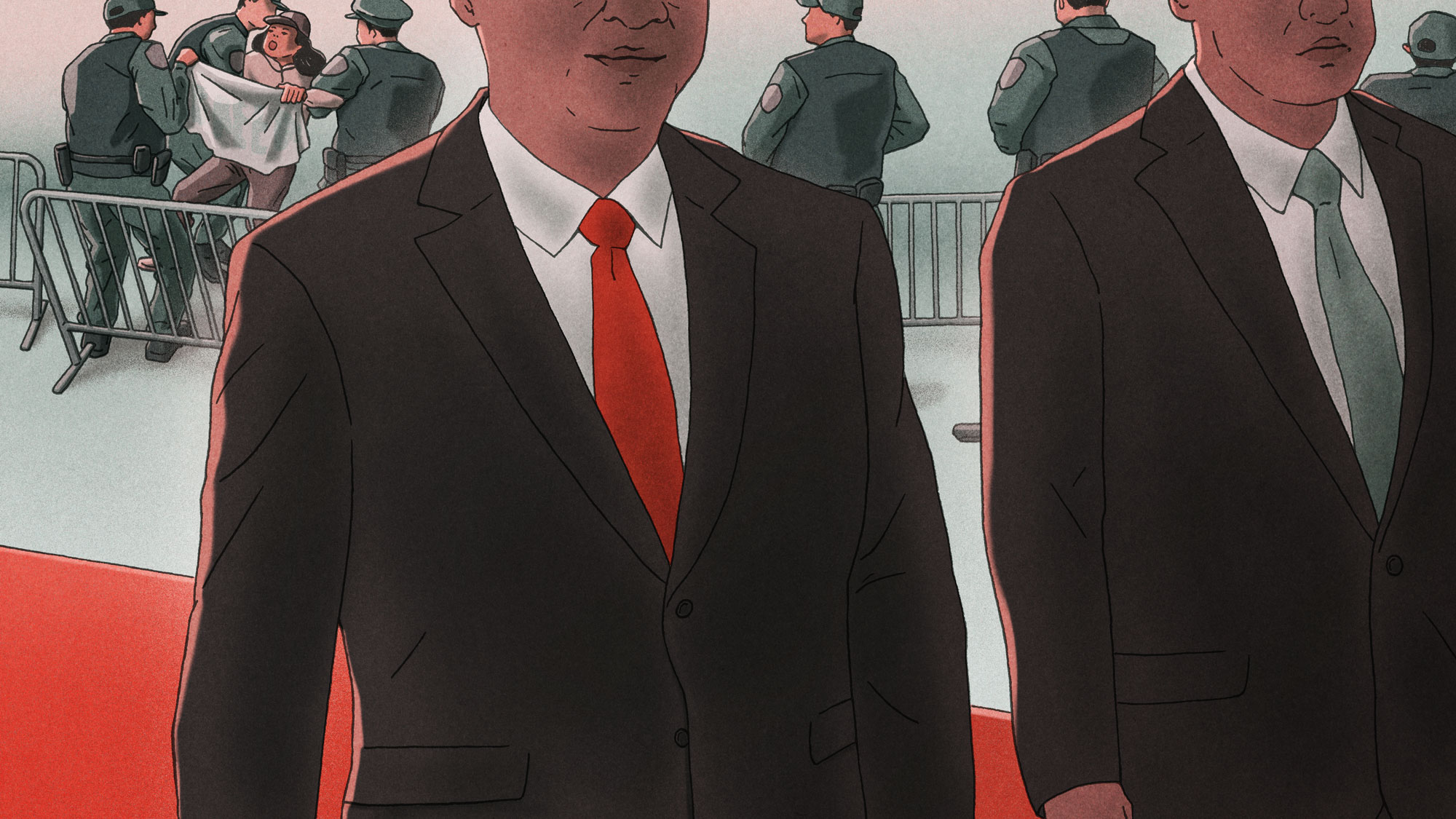
The study spotlit prominent incidents from ICIJ’s China Targets investigation, such as reports from Chinese and Uyghur activists that police intimidated their family members in China during Xi Jinping’s state visit to France in May 2024 to tamp down public demonstrations in Paris.
The authors, who interviewed several victims, also advocated for greater resources and support systems for the targets of such campaigns — many of whom have tenous immigration status and may not trust or be able to access resources in their host countries.
“This is not an abstract issue,” Dirks said. “For many people, this is a human rights problem that they face day in and day out, and that failure to address this problem will have real human consequences for those individuals and their wider communities.”