
CYPRUS CONFIDENTIAL
Russia secretly acquired Western technology to protect its nuclear submarine fleet
Russian Secrets, a new cross-border investigation, reveals the shadowy procurement network behind Russia’s surveillance program Harmony.
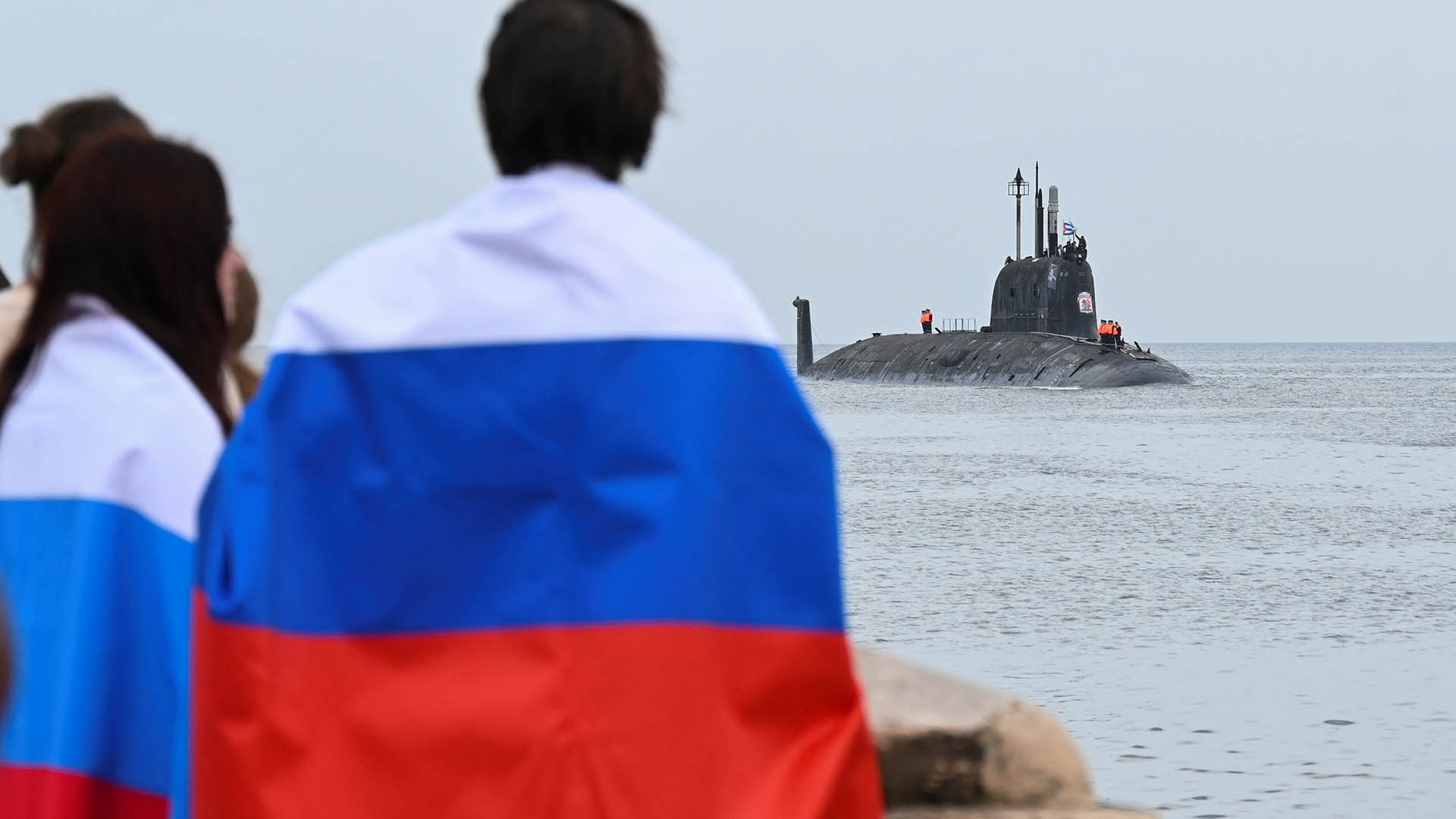
Russia is using sensitive high-tech equipment it secretly acquired from European, U.S. and Asian companies to protect its nuclear submarine fleet in the Arctic, according to Russian Secrets, a new cross-border investigation that exposes how the Kremlin’s procurement program remained hidden for years.
For about a decade, numerous defense companies and maritime suppliers sold sonars, underwater robots, fibre optic cables as well as research vessels and other sophisticated technology worth more than $50 million to a Cypriot entity secretly linked to a Russian defense contractor, the investigation found.
The equipment was intended for a Russian surveillance system code-named “Harmony,” which relies on a constellation of seabed sensors to detect enemy submarines approaching Russian nuclear weapons located in the Barents Sea, off Russia’s north coast.
Russian Secrets, an investigation led by German media outlets NDR, WDR and Süddeutsche Zeitung in collaboration with nine media partners, sheds new light on previously unknown details of the secret procurement network behind the Harmony program. The investigation is based on court documents, interviews with intelligence officials and leaked records previously obtained by the International Consortium of Investigative Journalists as part of Cyprus Confidential.
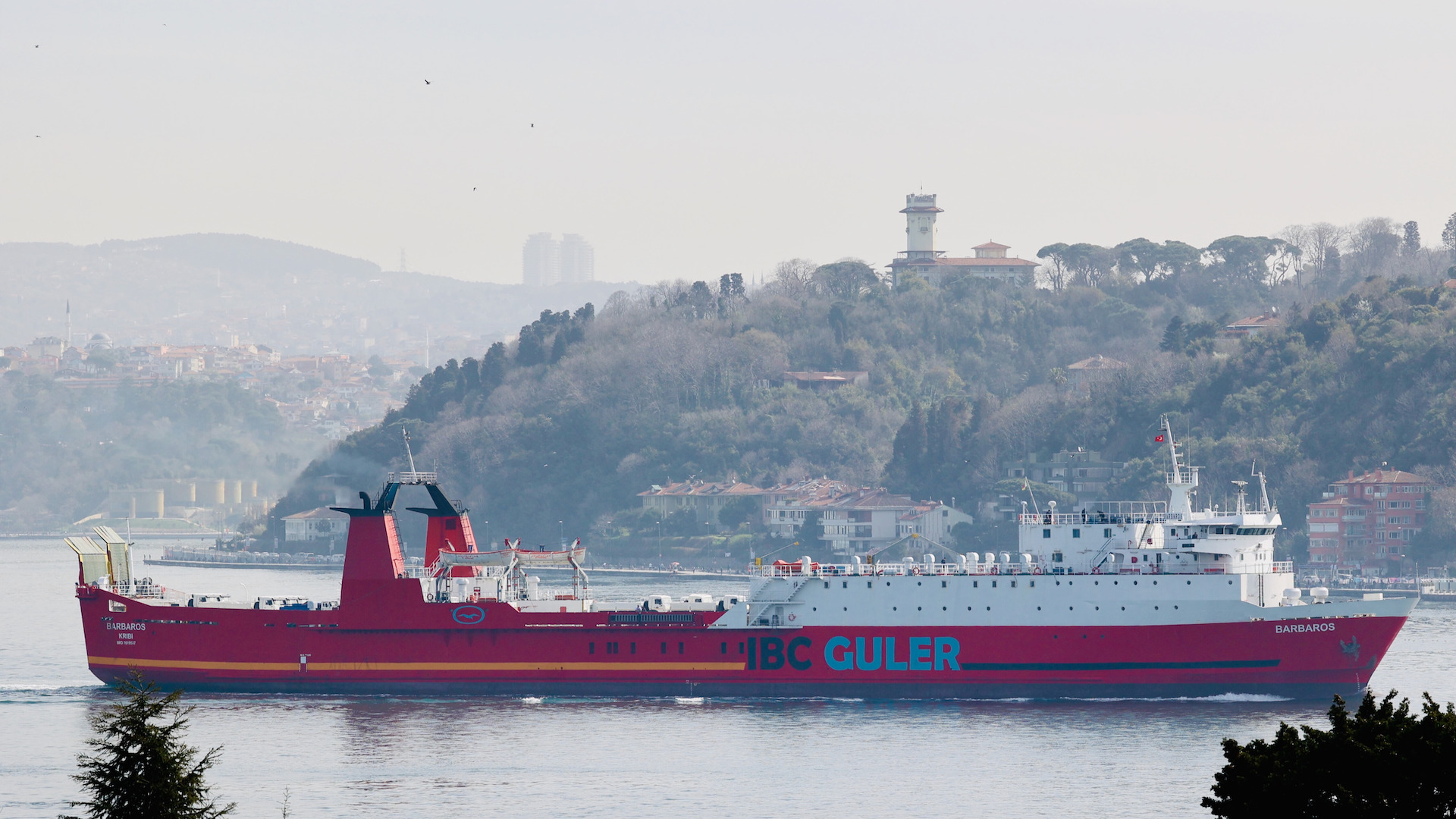
According to the records reviewed by the reporting team, between 2013 and 2024, companies including Norwegian defense giant Kongsberg, Japanese tech conglomerate NEC and U.S. sonar manufacturer EdgeTech traded with a firm called Mostrello Commercial Ltd. The Limassol-based entity was controlled by Alexey Strelchenko, a businessman whose Moscow-based companies own vessels and lay under-water cables for the Russian defense department, the reporters found. (All the companies have denied wrongdoing. Strelchenko did not respond to reporters’ comment requests.)
Russian Secrets reveals the details of the secretive trade operations that largely escaped Western authorities’ scrutiny until Russia’s 2022 invasion of Ukraine triggered a full-scale probe into shadowy procurement networks serving the Kremlin.
Commenting on the findings ahead of publication, David O’Sullivan, the European Union’s Sanctions Envoy, told NDR in an interview that he was not surprised to learn about the sophisticated system uncovered by the reporters.
“The Russians are very clever at circumventing our sanctions,” O’Sullivan said, adding that they use “various tricks which can disguise the true nature of the transaction.”
O’Sullivan acknowledged some flaws in Europe’s sanctions regime but said it has gotten “increasingly more effective,” since the EU imposed stricter measures after Russia’s annexation of Crimea in 2014. “There is no such thing as a perfectly watertight sanction system,” he said.
To Russia, via Cyprus
The inner workings of the secret procurement network began to emerge last year when U.S. and European government agencies targeted Mostrello and some of its suppliers.
In October 2024, the U.S. Treasury Department sanctioned Mostrello, Strelchenko and his companies for their role in “supplying Russia with advanced technology and equipment that it desperately needs to support its war machine.”
Around the same time, German authorities investigated Alexander Shnyakin, a trader of dual Russian-Kyrgyz nationality suspected of selling underwater technology to Russia through Mostrello in violation of trade laws. The case, which led to the trader’s conviction last month, opened a Pandora’s box of information on the middlemen involved in beefing up Russia’s underwater surveillance program. Shnyakin has appealed the conviction.
During Germany’s months-long investigation, based on wiretapped conversations and details of correspondence, German officials uncovered an allegedly illicit trade which dated back to at least 2021 and relied on intermediaries and “sham” transactions, according to court records. The investigators concluded that the Russian companies worked closely with the Kremlin’s intelligence agencies, NDR reported.
Russian Secrets show that the trader identified by the German investigators was allegedly only a cog in the illicit procurement system spanning four continents. The leaked Mostrello records examined by the reporters reveal that the Cypriot entity’s business dealings involved more than 50 suppliers — mostly Europeans — which provided sensitive components for the “Harmony” system, including an underwater drone capable of operating at depths up to 9,800 feet, hundreds of miles of fiber optic cables and a fleet of ships that posed as commercial or research vessels while carrying out installation tasks for the Russian military.
In September, reporters from Dutch broadcaster KRO-NCRV visited Mostrello’s headquarters in Limassol and found an office that appeared to have been abandoned abruptly, with no staff on site. Former employees did not respond to requests for comment.
Besides Mostrello, the procurement network also involved a dozen shell companies registered in the Seychelles, Belize and the British Virgin Islands, with the apparent intent to conceal their true ownership and connections to Russia, the investigation found.
In a statement to Norwegian broadcaster NRK, Vice Admiral Nils Andreas Stensønes, who heads the Norwegian intelligence agency, said that Russia continuously tries to evade Western sanctions and exports regulations.
“One trend is establishing complex procurement networks with legitimate European companies as contact points,” Stensønes said. “The actors exploit the EU’s free market to access Western technology. At the same time, this method conceals parts of the supply chain and obscures the Russian end-user.”
Officials consider the exact location of the “Harmony” system as classified. But by tracking the equipment procured via Cyprus, the international reporting team found clues about its location in the waters off the coast of Murmansk, Novaya Zemlya and Alexandraland, in the Arctic Ocean, where the sensors appear to be arranged in an arc shape.
The Russian government did not reply to reporters’ comment requests.
Russian Secrets is an investigation by NDR, WDR and Süddeutsche Zeitung (Germany), Le Monde (France), L’Espresso (Italy), Kyodo News (Japan), NRK (Norway), KRO-NCRV (Netherlands), SVT (Sweden), The Times (U.K.), The Washington Post (U.S.) and ICIJ.