IMPACT
‘Justice was not served’: Human trafficker identified in ICIJ’s Trafficking Inc. sentenced in Nigeria
A survivor who testified in the case slammed the sentence — a choice between prison or paying a fine — which Nigeria’s anti-trafficking agency intends to appeal.
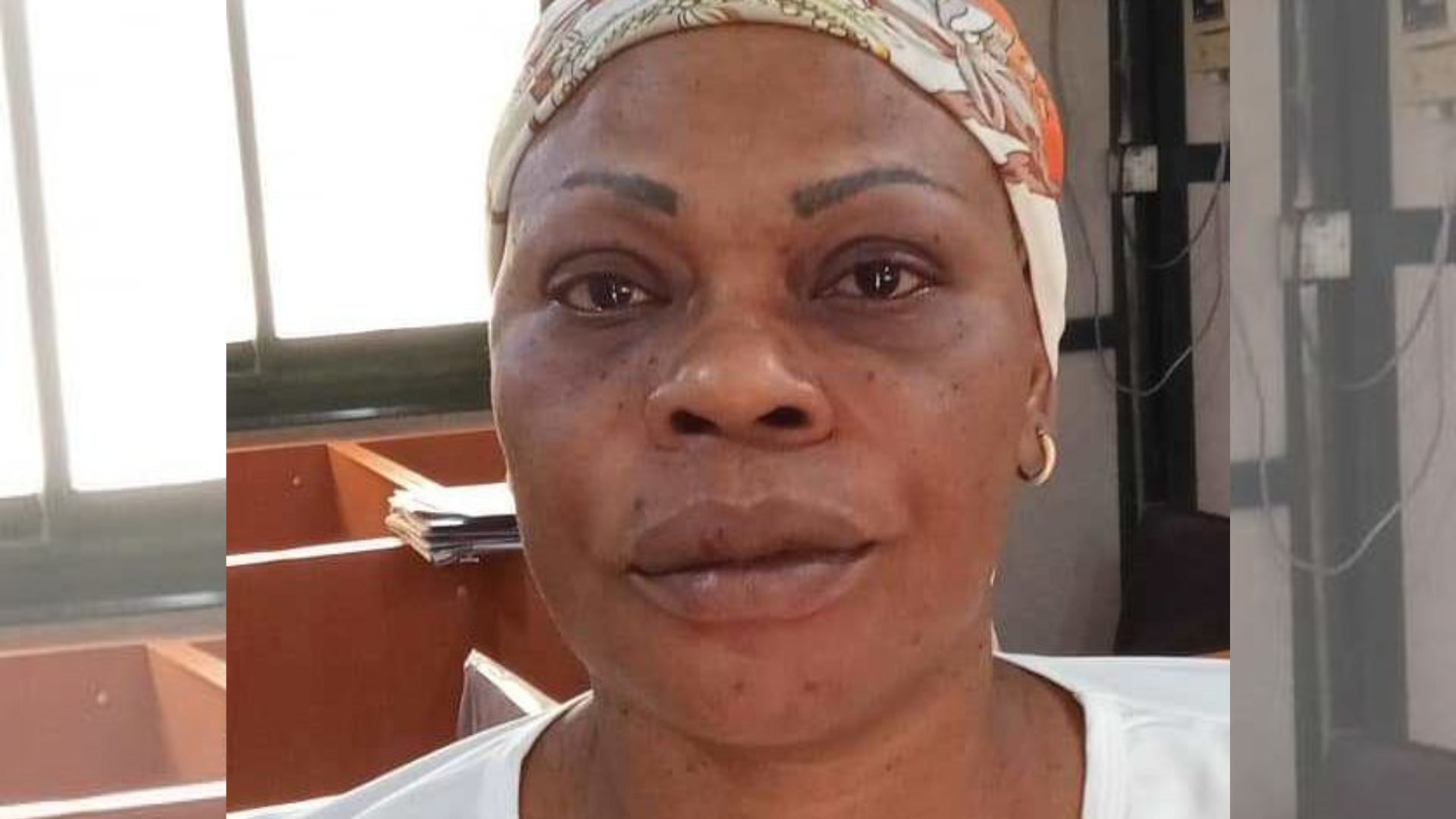
A Nigerian court sentenced Christiana Uadiale, a human trafficker spotlit by ICIJ’s 2023 Trafficking Inc. investigation, to five years in prison or an optional fine of 11 million naira, around $7,200.
Uadiale, also known as “Christy Gold,” was arrested in December after a federal high court in Nigeria convicted her in absentia in March 2024 on a six-count charge of trafficking in persons.
The prison sentence — six concurrent five-year terms, one for each guilty charge — can be evaded if Gold chooses to pay the fine, Sam Ofia, zonal commander for Benin at Nigeria’s National Agency for the Prohibition of Trafficking in Persons, told ICIJ. The agency, he said, intends to appeal the sentence.

She was also sentenced to pay 1.5 million naira (just under $1,000) each, or 3 million naira (just under $2,000) total, to the two survivors who testified in the case “as compensation and restitution for the physical, mental and emotional trauma she subjected them to.”
“Giving me a compensation will not do any justice for me,” Blessing, one of the survivors who testified against Gold, told ICIJ. “What I was really expecting was for them to imprison her.”
Angus Thomas, a British activist who founded an anti-trafficking education organization based in Ghana and has been in contact with several survivors of Gold’s trafficking network, denounced the judge giving Gold the option to pay the 11 million naira fine instead of serving prison time. ICIJ could not confirm whether Gold is still in custody.
“The message this decision sends to traffickers, to survivors and to the world is devastating,” Thomas said in a statement to ICIJ. “Even after showing contempt for the justice system and her victims, she has now been allowed to walk free, to once again enjoy the proceeds of her crimes. This outcome makes a mockery of Nigeria’s robust anti-trafficking laws and tarnishes the nation’s global standing.”
In the sentencing documents, Justice F. A. Olubanjo explained she provided the option of a fine “reluctantly” after the prosecution urged the court to prioritize compensation and restitution to the victims who testified.
What I’m seeking for is justice.
— Blessing, a survivor who testified against Gold.
“It is in my view, easier for restitution to be made by a convict who is not incarcerated, because he or she can better source for funds to compensate the victims,” Olubanjo wrote.
“Justice,” Thomas said, “was not served.” He called the judgment “troubling,” criticizing the compensation in place of prison. Blessing, who has already received her portion of the fine, also condemned the judge’s reasoning.
“That’s totally wrong, because you cannot feel that I’m going to be happy for leaving the person that caused me pain to pay me a fine,” she told ICIJ. “What I’m seeking for is justice, because them letting her go, she’s going to do more than what she has done to me to other people.”
The compensation paid to her, Blessing said, was less than the money she had collected for Gold while being exploited.
Gold emerged as a key figure in a June 2023 investigation by ICIJ and Reuters, which identified the United Arab Emirates as a major destination for sex trafficking. Court records and interviews with officials, survivors and activists revealed how criminal networks lured African women into sexual slavery, coercing them by imposing crushing debts and exploiting their spiritual beliefs.
The investigation was part of ICIJ’s Trafficking Inc. project, which explored the networks of companies, people and business practices that profit from cross-border labor and sex trafficking abuses. Christy Gold, who showcased a glamorous lifestyle on social media while on the run from sex trafficking charges in Nigeria, was a central figure in one of those networks.



Nigerian authorities charged Gold with six counts of sex trafficking, but she failed to show up for a scheduled court appearance on Nov. 3, 2021, after posting bail. Her lawyer told the judge that she had been taken to a hospital, and the judge ordered that she be taken back into custody, but authorities were not able to locate her. Olubanjo heavily criticized her disappearance in the sentencing documents.
“No reason was given by convict, during the Sentencing Hearing, for her abscondment,” Olubanjo wrote. “Her alleged ill health is definitely no reason for her to abscond and abandon her trial.”
Olubanjo also disparaged Gold’s “theatrical stunts” attempting to prove she was ill, and cited Gold’s securing a second passport as “evidence of the fact that she deliberately intended to escape from the long arms of the law.”
After the publication of ICIJ’s 2023 investigation, Gold resurfaced on TikTok, flashing gold jewelry and posting comments and videos that indicated she was in the UAE, apparently on property tours, and even traveling back to Nigeria, despite absconding in 2021.
According to interviews and court statements, Gold and her associates targeted Nigerian women desperate for work, promising them jobs in Dubai and helping them obtain passports and tourist visas to travel.
One woman said once she arrived in Dubai, she was told there was no job. Instead, she’d have to participate in sex work at clubs, restaurants and hotels to pay her $12,000 debt to Gold for bringing her there.
Three women who say they were trafficked and exploited by Gold alleged that she took their passports, and that Gold threatened to kill them and dump their bodies in the desert if they didn’t do as they were told. At one point, the women said, they lived in a two-bedroom apartment, with Gold in one bedroom and as many as 18 women crammed into the other.
Gold’s brother allegedly tortured those who didn’t make enough money. He starved them, flogged them and shoved hot chili paste into their vaginas, according to three anti-trafficking officials and five women who provided detailed accounts in interviews and court statements.
In a statement to the court in Nigeria after she was initially charged, Gold denied that she and her brother were sex traffickers. She told the court that she had helped men and women move to the UAE by subletting space in an apartment she owned in Dubai, but denied knowing what they did for work.
ICIJ member Musikilu Mojeed contributed to this report.