TRANSNATIONAL REPRESSION
Parliamentary committee labels China ‘flagrant’ perpetrator of transnational repression on UK soil
A new report details how China and other authoritarian regimes are increasingly targeting critics who sought refuge in the country.
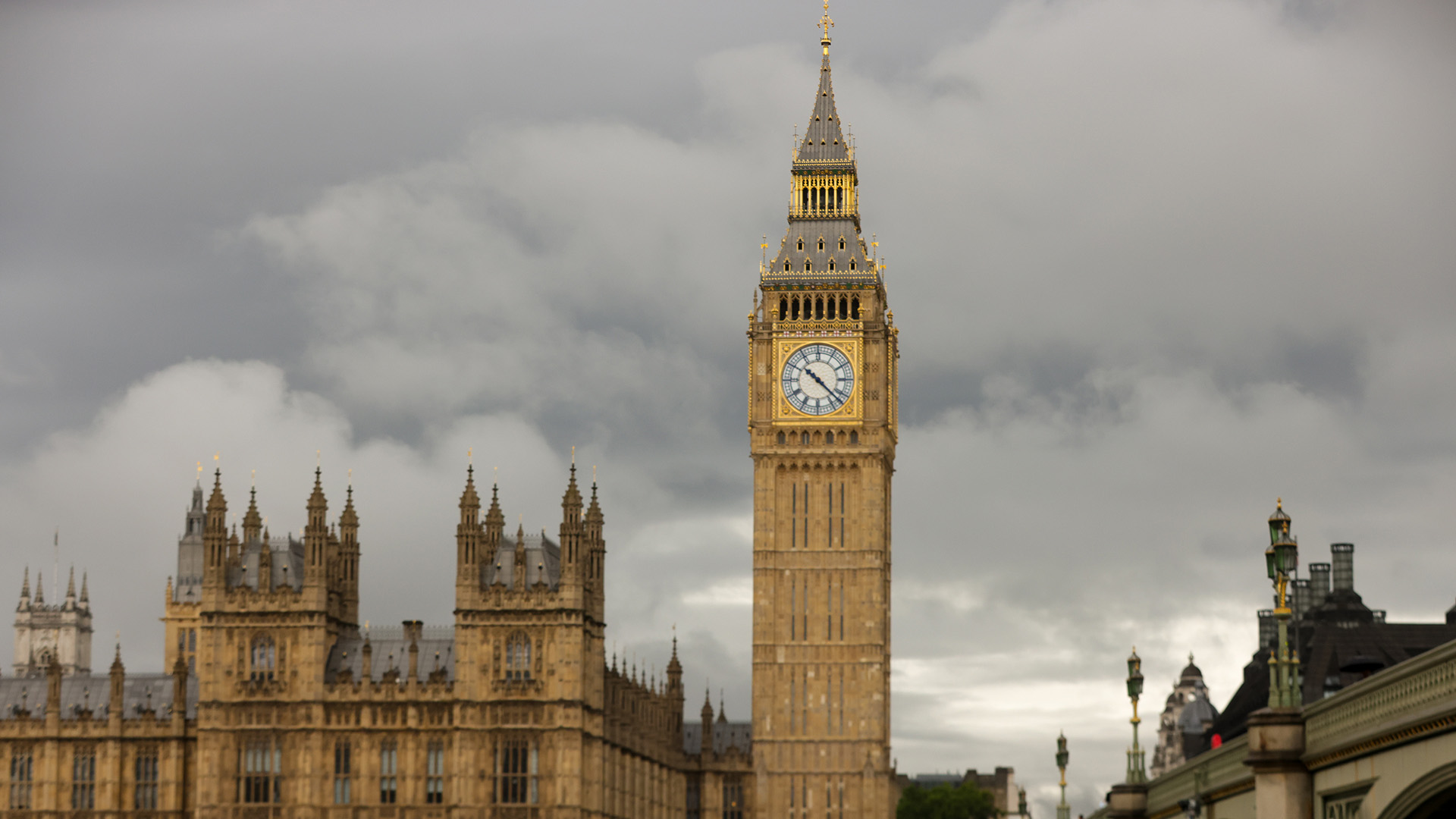
China is among the worst perpetrators of transnational repression in the United Kingdom, increasingly persecuting dissidents who have sought refuge in the country, according to the U.K. Joint Committee on Human Rights.
In a report released this week, the parliamentary committee said it had reviewed evidence showing that the Chinese government uses a “broad range” of tactics to target its critics overseas and that — alongside Russia and other authoritarian regimes — it exploits the U.K.’s lack of strategy to address the threats.
The committee urged the U.K. government to adopt a clear definition of transnational repression, a term used by some government agencies and advocates to describe states reaching across borders to surveil, harass or attack dissident members of their diaspora.
It also recommended setting up an effective reporting mechanism, creating a victim support hotline and training law enforcement on how to identify and respond to such cases, as well as requiring individuals and organizations who China instructs to carry out political influence activities in the U.K. to comply with the Foreign Influence Registration Scheme.
“The UK should be a place of sanctuary and safety, however we are concerned that there is a growth of foreign repression on UK soil that is going unchecked,” Lord David Alton, who chairs the committee, said in a statement.
“More needs to be done to give support and protection to the individuals and communities most at risk of transnational repression,” Lord Alton said.
The growth of foreign repression on UK soil going unchecked.
We have published a report on transnational repression and we are calling on the Government to do more to protect and support victims 👇
Read the report: https://t.co/agNvG7Hszs pic.twitter.com/AQypkUG3im
— UK Parliament Human Rights Committee (@HumanRightsCtte) July 30, 2025
The Chinese Embassy in the U.K. did not reply to the International Consortium of Investigative Journalists’ comment request about the new report.
The cross-party committee’s inquiry and report come at a time when awareness of authoritarian regimes’ seeking to control their diasporas is growing in several Western countries. In June, the leaders of the Group of Seven issued a joint statement condemning transnational repression “as an important vector of foreign interference” and pledged to boost cooperation to protect their sovereignty and the targeted communities.
The UK should be a place of sanctuary and safety, however we are concerned that there is a growth of foreign repression on UK soil that is going unchecked.
— U.K. Joint Committee on Human Rights chair Lord David Alton
ICIJ’s China Targets investigation recently detailed Chinese authorities’ tactics to monitor, intimidate and threaten political opponents and exposed democratic nations’ weak response to state-sponsored repression. The probe also showed how the failure to contain Chinese authoritarianism has enabled it to reach into intergovernmental institutions such as the United Nations and Interpol, the international police organization.
In collaboration with 42 media partners, ICIJ interviewed 105 people in 23 countries, including in the U.K., who have been targeted by Chinese authorities in recent years for criticizing the government’s policies in public and in private.
ICIJ found that Beijing’s strategy to silence regime critics also relies on staff of Chinese nongovernmental organizations with access to United Nations human rights proceedings, professional hackers and members of China’s diaspora connected to the Chinese Communist Party-linked United Front Work Department. In the U.K., a novel tactic included using right-wing social media groups to incite mobs against Hong Kong exiles — which resembles other Chinese state-linked influence operations, according to ICIJ partner The Guardian.
Time for action
The report by the U.K. parliament committee is the result of an inquiry launched earlier this year, which involved dozens of oral testimonies and written evidence by victims from 12 authoritarian countries, including Saudi Arabia and Turkey, as well as rights advocates, academics, representatives of intergovernmental agencies and U.K. government officials.
Witnesses highlighted China, Russia and Iran as the three “most flagrant” perpetrators of transnational repression in the U.K., the report said.
Hong Kong Watch, a U.K.-based activist group, explained to the parliamentarians how China uses violence, harassment and surveillance to intimidate “members of minority ethnic, religious, and political identity groups whose existence is deemed a potential risk to national security.”
The committee also heard from Chloe Cheung, a 20-year-old Hong Kong activist who said she has been living in fear for her safety since Hong Kong authorities placed a $130,000 bounty on her last year for allegedly “inciting secession” and “colluding with foreign forces.
Simon Cheng, who, like Cheung, is one of 10 U.K.-based Hong Kong activists on the bounty list, welcomed the report as “long-overdue and vital recognition of the pervasive and insidious threat that transnational repression poses in the UK.”
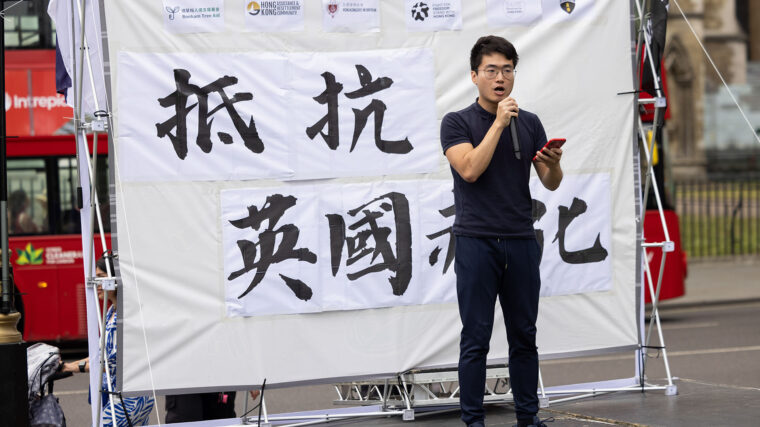
Cheng, a former employee of the British Consulate in Hong Kong, received asylum in 2020 after he said he was tortured by the authorities in mainland China and accused of being a British spy. Even after he officially cut ties with his family to protect them from authorities’ retaliation, last year Hong Kong security police questioned his parents and sisters, according to local media.
Cheng, an exiled pro-democracy activist who founded Hongkongers in Britain, said it is crucial that the government acts on the committee’s recommendations, collecting data on transnational repression, creating a reporting hotline for victims, training police officers and monitoring China’s influence activities in the U.K.
“Now it’s time for the Government to follow through, not selectively, but comprehensively, to protect our fundamental rights, the integrity of our democracy, and the safety of everyone living in the UK,” Cheng told ICIJ in a written message.
Call out Interpol abusers
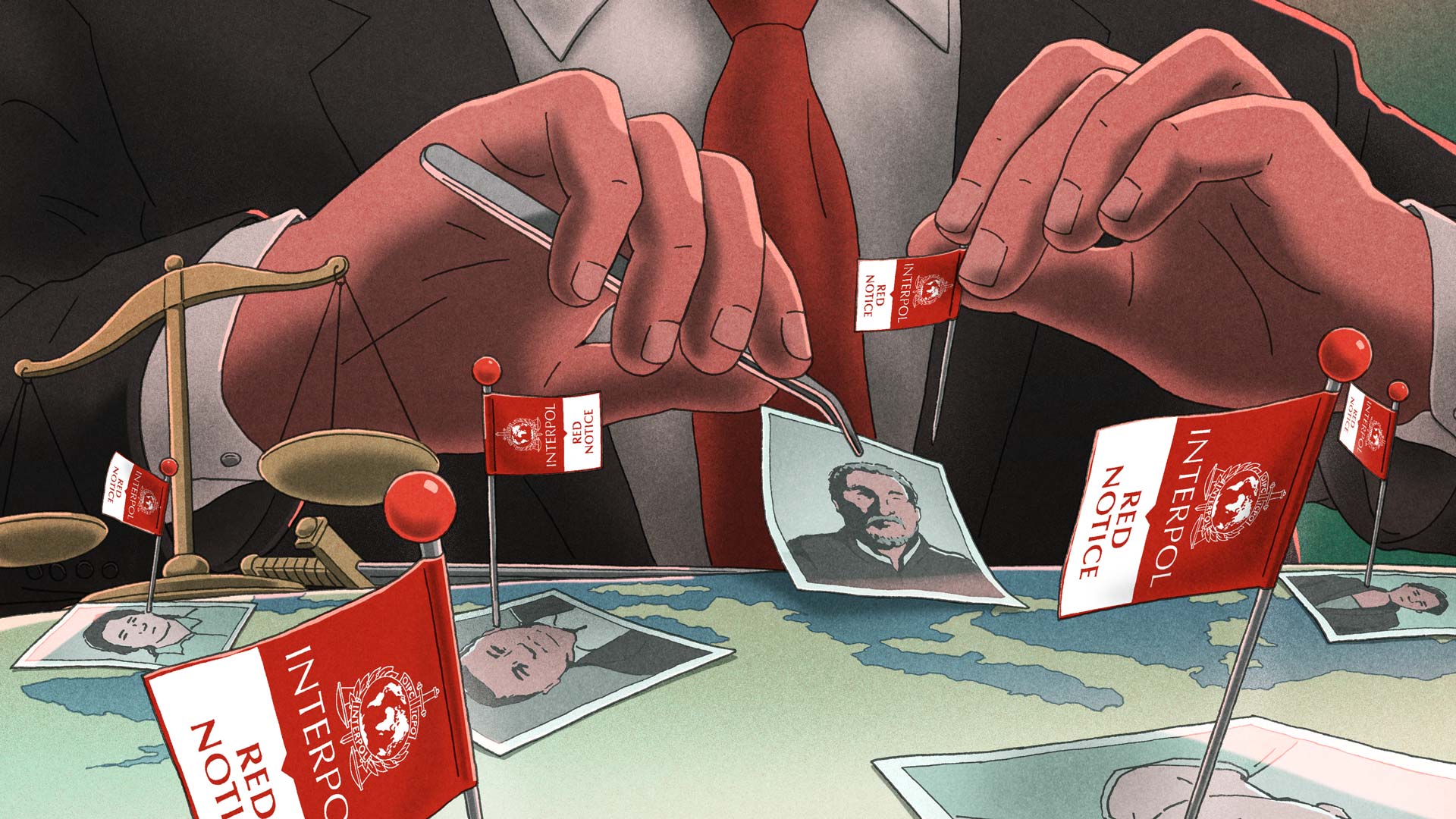
In the report, the committee also identified the abuse of Interpol’s red notices — alerts circulated among police forces worldwide — as a common tactic used by China and other authoritarian regimes to pursue critics overseas. It called on the U.K. government to “expose malicious, vexatious, and politically motivated use of Red Notices” and put pressure on the international police organization “to reform procedures and call out serial abusers.”
“We are deeply concerned by the misuse of INTERPOL Red Notices by certain member states,” the report said.
A special task force within Interpol screens red notices to ensure information is both accurate and apolitical before authorizing their publication in the organization’s databases. But if a red notice target doesn’t have much of a public profile, the task force is likely to approve a request, allowing politically motivated red notice requests to slip through, lawyers representing red notice targets told ICIJ.
In response to the committee’s recommendations, a spokesperson for Interpol told ICIJ in a statement that the police organization “knows Red Notices are powerful tools for law enforcement cooperation, which is why we have robust processes for ensuring that all INTERPOL Notices and Diffusions comply with our rules.”
As part of China Targets, ICIJ revealed how China has used red notices and other Interpol tools to target not only criminals, but also businesspeople with political connections, along with regime critics and members of persecuted religious minority groups seeking refuge overseas.
The reporters spoke with eight of China’s red notice targets and reviewed extradition records and other documents concerning a total of nearly 50 suspects pursued by China through Interpol after 2016, when Interpol set up the task force.
Chinese authorities also used the arrest of family members and other unethical tactics to pressure the red notice targets, ICIJ found. In one case revealed in China Targets, Chinese officials asked Alibaba’s Jack Ma, one of China’s richest men, to persuade a China-born naturalized citizen of Singapore to return voluntarily from France and testify in an unrelated case.
Without commenting on ICIJ’s findings, Liu Pengyu, a spokesperson for the Chinese Embassy in Washington, D.C., said in a statement that “the Chinese government strictly abides by international law and the sovereignty of other countries.”