Q&A
Dartmouth researchers use ICIJ database to show how the ultrawealthy exploit the offshore world
ICIJ spoke to author Herbert Chang about the study, which found that elites in both democratic and authoritarian countries are well-versed in financial secrecy tactics.
A recent study based on data from the International Consortium of Investigative Journalists’ Offshore Leaks Database found that elites around the world rely on specific secrecy tactics to obscure and shield their wealth.
The research paper, “Secrecy strategies: Global patterns in elites’ quest for confidentiality in offshore finance,” found that ultrawealthy people in countries with high rates of financial transparency and oversight are just as likely to turn to the offshore world as their counterparts living under corrupt regimes. However, these tactics may differ depending on the political climate.
The researchers from Dartmouth College found that those from countries with high institutional corruption were more likely to diversify their assets across multiple offshore financial centers. In countries where governments are more likely to confiscate assets — either because of effective law enforcement or fewer civil rights protections — the ultrawealthy relied more on secrecy strategies, such as the use of nominee directors.
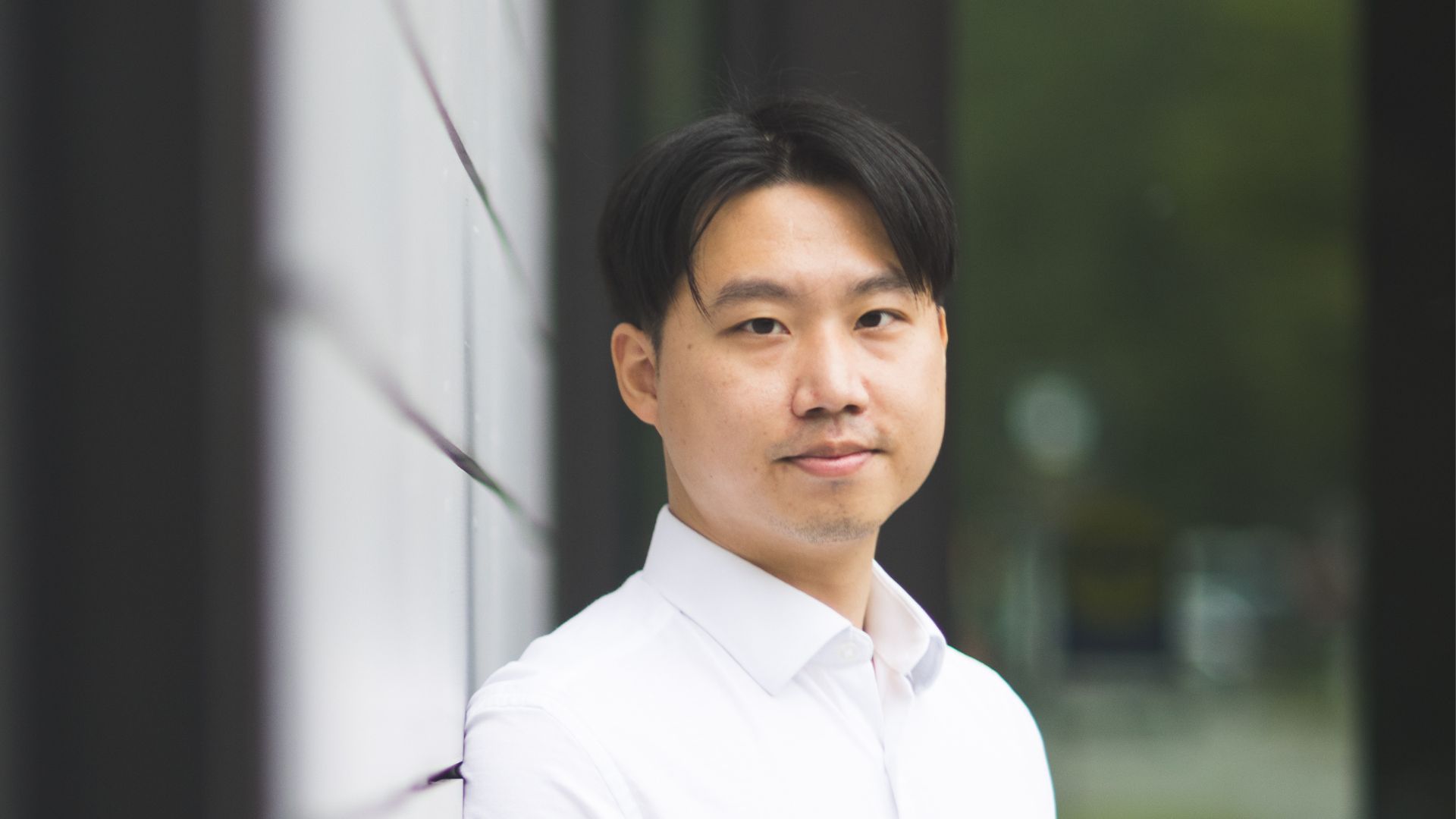
To learn more, ICIJ spoke with the research paper’s first author, Herbert Chang, an assistant professor of quantitative social science at Dartmouth. It builds on his previous work with the same co-authors, Brooke Harrington and Daniel Rockmore.
Their latest study analyzed data involving thousands of billionaires from 65 countries and identified distinct offshore strategies, including a reliance on nominees and blacklisted jurisdictions to park and shield assets from scrutiny and seizure.
The Offshore Leaks database, which ICIJ publishes and maintains for public use, contains information on more than 810,000 offshore entities identified in the Pandora Papers, Paradise Papers, Bahamas Leaks, Panama Papers and Offshore Leaks investigations.
“The individuals named in the Offshore Leaks Database—which include a wide range of heads of state, celebrities and corporate leaders—all have two things in common: they are extremely wealthy and have something to hide,” the researchers said in their report. “This group includes, but is not limited to, most of the approximately 3,000 billionaires in the world.”
This interview has been edited for clarity and brevity.
ICIJ: How did you and your colleagues use ICIJ’s Offshore Leaks database in your research? Why did you turn to it as a source of data?
Herbert Chang: One big motivation was a lot of these metrics out there in terms of financial secrecy and tax evasion rely on expert labels. This is how much [experts] rate different jurisdictions or countries for their level of financial secrecy. But what we really wanted to be able to do is derive these metrics, such as the use of bear bonds or the use of nominees or the level of diversification, purely from the social network.
What the ICIJ data allowed us to do was derive these metrics of secrecy strategies directly from human behavior, rather than relying on expert ratings. The ICIJ dataset allows us to base our dependent variables solely on the actual behavior of people using the offshore system, which is great. Some of the things that we did was also conduct robustness checks, to check against well-known AML [anti-money laundering] metrics such as the Basel Index, and we found very high correlations.
The article takes quite a quantitative approach. Why, and how did that impact your findings?
My colleague, Brooke Harrington, she’s probably the world authority on this subject from a qualitative perspective. We were trying to see if we could discover the same things using quantitative methods, or even identify things that were unexpected. One thing is definitely scale. Using quantitative methods, we’re able to parse through all 2.9 million unique entities from the ICIJ dataset and then look broadly at more than 60 countries.
Those are things that would be very difficult just relying on qualitative methods. I think that’s definitely one of the main motivations. And the second thing is, doing it this way we’re able to discover different clusters of behavior. So we found different concealment strategies, for instance, in countries in Europe versus the United States versus Asia.
The paper posits that there might be a counterintuitive result from the analysis, that offshore finance is amplified by both negative and positive political conditions in a home country. Can you explain this?
This is an example of a U-shaped curve that might not be apparent directly in qualitative research. So in countries where there’s a lot of corruption, or they’re authoritarian, where there’s a risk of your assets being confiscated, then the motivations for moving your assets offshore are very obvious. But we also found countries, like a few Scandinavian countries such as Denmark, and some other European countries, like Austria, where citizens are motivated to conceal their assets as well, albeit for different motivations. The use of offshore might not necessarily be tied to a matter of legality. It could be tied to social pressures, such as shame or public opinion. So we’re looking more into, especially in democracies, what are the mechanisms and motivating factors that drive people toward using the offshore system?
One of the main findings is that elites who reside in countries where corruption and the risk of asset confiscation are high rely heavily on specific types of secrecy tactics, as opposed to ones in democratic societies. Can you describe some of those tactics and explain why they might be problematic?
The first type is using some form of identity concealment. So if you’ve watched “Ozark” or some of these movies where there are bear bonds — the idea of a bear bond, for instance, is you have shares to a company, and all these shares are basically printed on a piece of paper. So whoever holds them, like the physical copies, has ownership of the shares. What this means is the true ownership is completely concealed. Another strategy is to use nominees. These are people who have ownership of the company in their name, thereby protecting the actual beneficiary’s identity. Other forms include using blacklisted offshore jurisdictions. You can diversify across different offshore financial centers, whether they’re blacklisted or not.
How might global regulators be able to clamp down on elites relying on some of the trends that you identified in the report?
After our first paper, we got a lot of news requests from people interested in the Russian invasion of Ukraine. What was a little surprising this time was we got requests from countries that are actively dealing with these issues. This includes Denmark and New Zealand, places where this is an ongoing debate. For instance, in New Zealand, New Zealand itself is known as tax haven for a lot of Asian countries trying to incorporate there. What this paper might help with is actively looking at how different political conditions drive people to different types of offshore use. And if we know how people are using the offshore system, then we can target those specific strategies rather than being like a location-based type of intervention.