About the Cancer Calculus investigation
How Merck keeps the price of its lifesaving cancer drug, Keytruda, sky-high, locking out patients and squeezing health care systems worldwide.
A yearlong investigation by the International Consortium of Investigative Journalists has uncovered how Merck & Co. has kept the price of its blockbuster cancer drug Keytruda extraordinarily high while deterring competition.
The Cancer Calculus, an investigation by ICIJ and 47 media partners in 37 countries, also sheds new light on the strategies that have allowed Merck to widen Keytruda’s use — even in cases where its benefits are more limited and lower dosages may be just as effective.
A game changer in cancer treatment, Keytruda, known generically as pembrolizumab, weaponizes a patient’s immune system against cancer cells. The U.S. Food and Drug Administration approved it in 2014 to treat advanced melanoma, the most aggressive form of skin cancer. The FDA has since approved it for 19 types of tumors.
ICIJ’s investigation found that Merck’s list prices, or the initial pre-discount prices, vary wildly across countries, ranging from about $850 for a single 100 milligram vial in Indonesia to $6,015 for the same vial in the U.S.
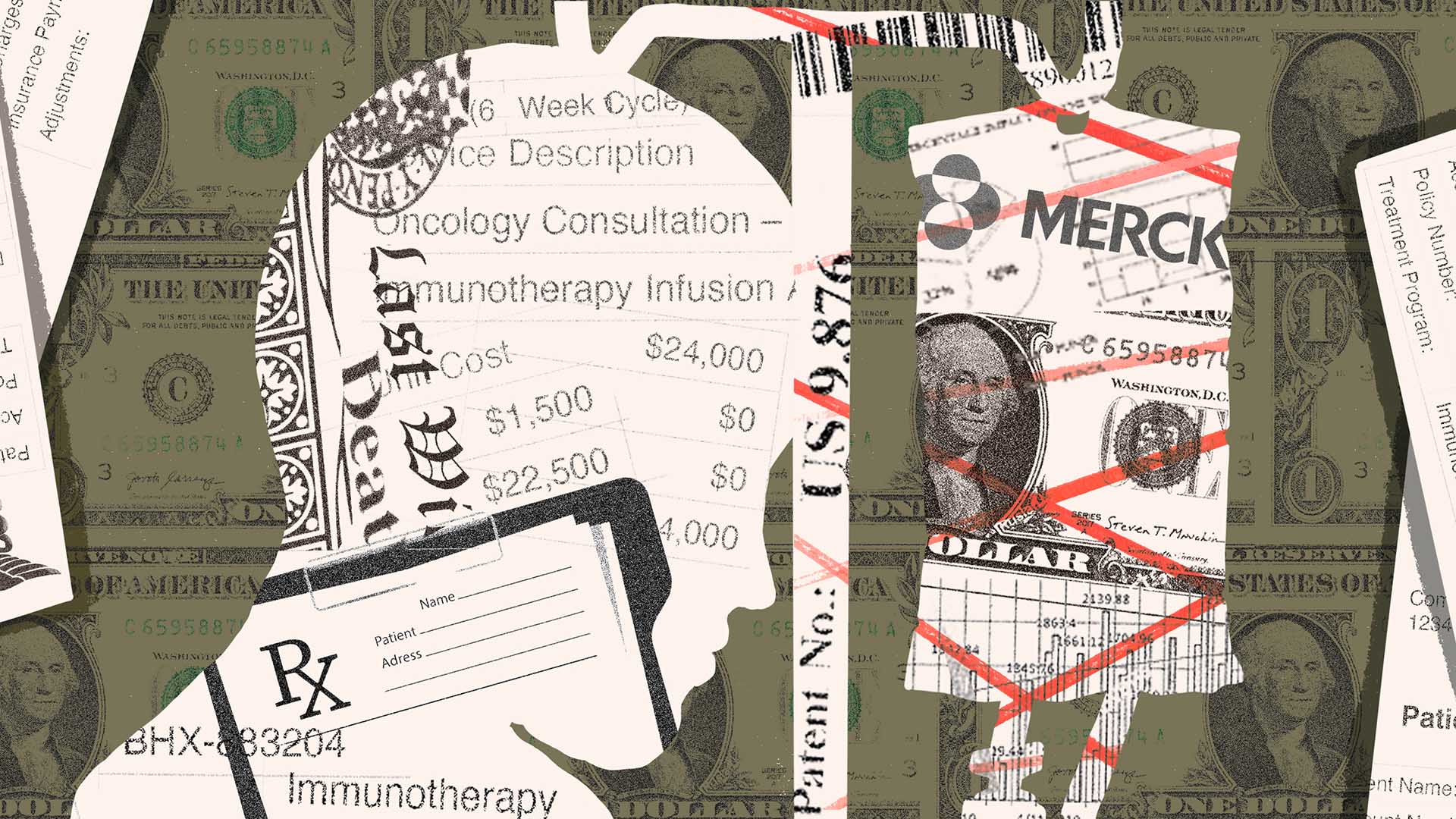
Usually administered via intravenous infusion in 200 mg doses every three weeks or 400 mg doses every six weeks, treatment can last up to two years — amounting to a staggering $416,000 according to the drug’s list price in the U.S. — and sometimes longer, though insurance companies often stop covering the drug after the initial two years.
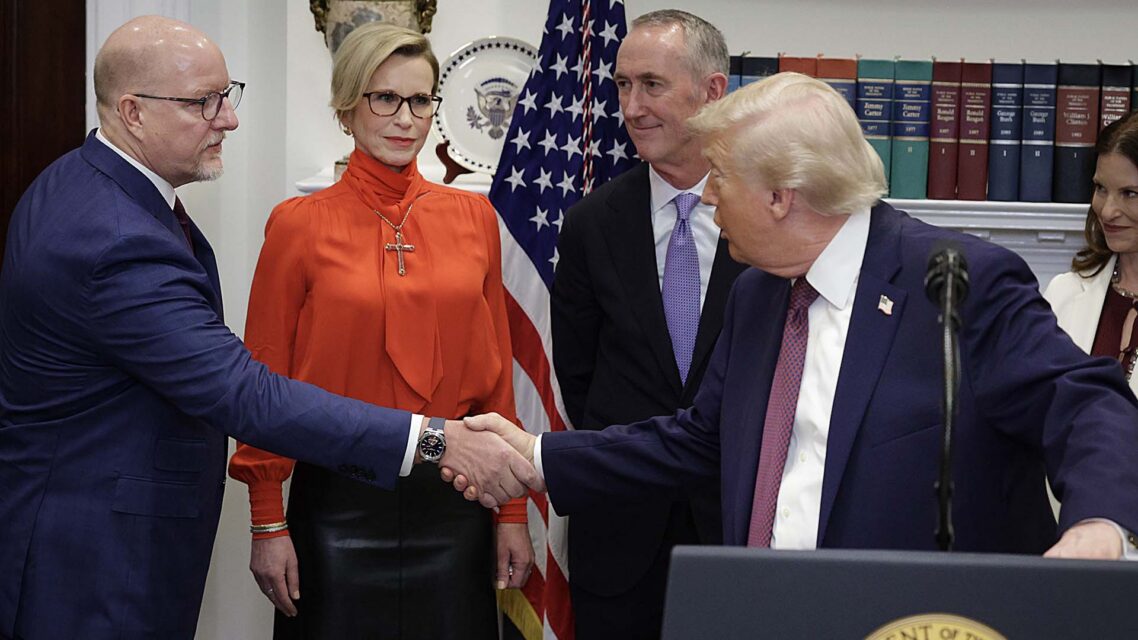
With the cost of prescription drugs continually soaring, President Donald Trump convened top executives from major drug companies at the White House this past December and promised to lower U.S. drug prices. Among the executives was Robert M. Davis, head of Merck. All the companies pledged price cuts, but Merck made no such commitment with Keytruda, which generated $31.7 billion in 2025 — nearly half the company’s revenue. And 60% of the drug’s sales were in the U.S.
Based on hundreds of interviews with oncologists, cancer patients and their families, patent experts, regulators, pharmaceutical industry insiders and others, as well as exclusive pricing data and patent analyses, together with thousands of pages of company presentations, patent board documents, lawsuits and corporate and regulatory records, and more than 1,000 public records requests in 27 countries, the Cancer Calculus investigation pulls the curtain back on precisely how Merck maintains its dominance.
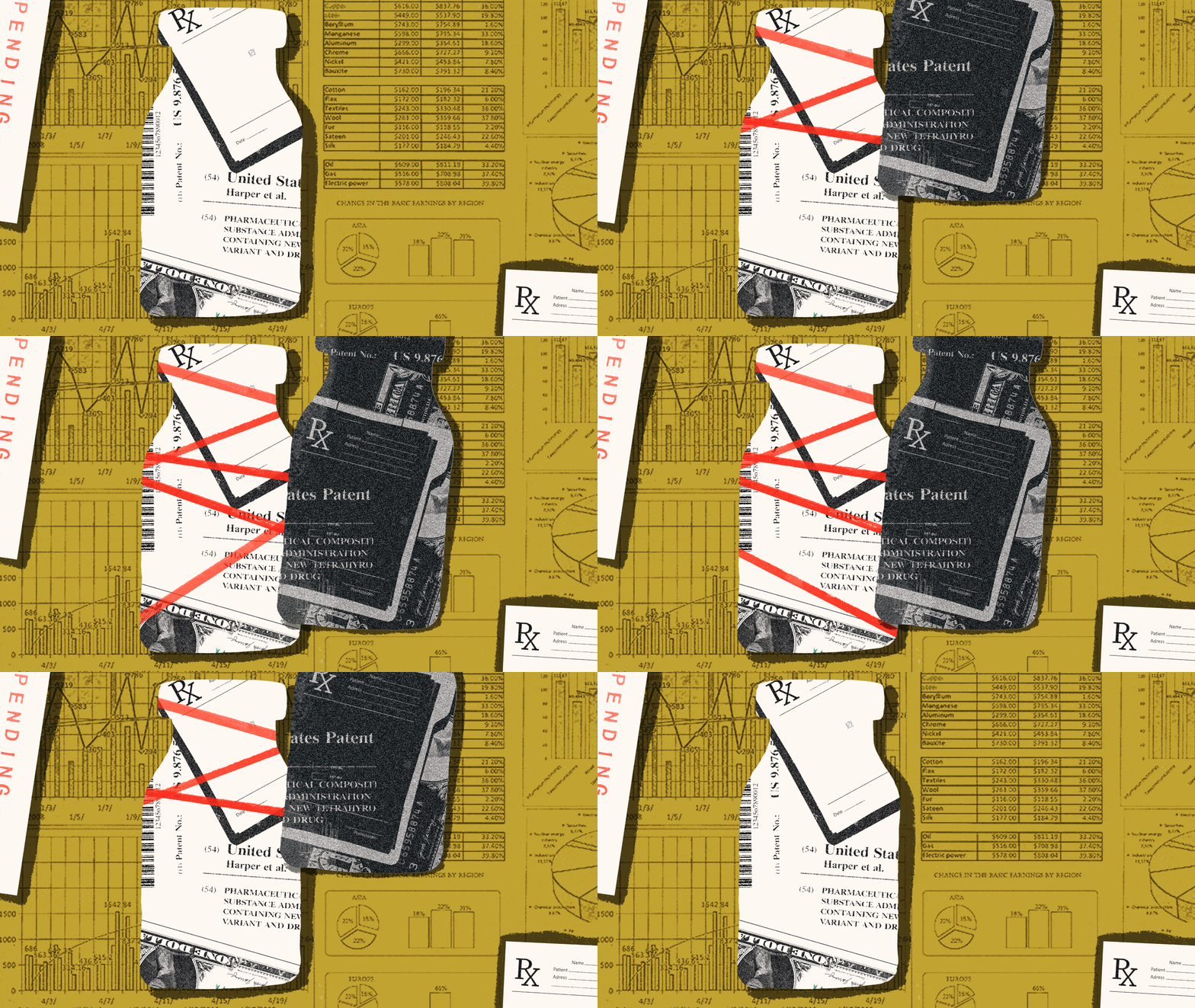
A patent fortress: An ICIJ analysis of Keytruda patents based on patent databases and data shared by I-MAK, a nonprofit that examines inequities in the patent system, shows that there are at least 1,212 patent applications that form part of the Keytruda patent families in 53 countries, regions and territories. The drug’s primary patents are set to expire in 2028, but ICIJ found that Merck has continued to file and obtain secondary patents beyond Keytruda’s main pharmaceutical component, potentially extending the drug’s commercial exclusivity until at least 2042 in the U.S. These additional patents, which can overwhelm and deter competitors, could deny hundreds of thousands of patients cheaper alternatives over the next 15 years.
Merck told ICIJ that it’s a common myth that pharmaceutical companies “game the patent system” by filing multiple overlapping patents to delay the entry of generic or biosimilar alternatives to the market. Instead, the company said, it had been repeatedly shown that patent counts do not predict when generics are introduced.
Calculated dosing: Researchers report that Keytruda is often prescribed at higher doses or for longer periods than needed. The World Health Organization estimates that switching just patients with lung cancer to weight-based dosing could save $5 billion globally by 2040. Hospitals in Singapore, Malaysia and Taiwan have arrived at the same conclusion, and several nations, including the Netherlands, Canada and Israel, have started to switch to weight-based dosing — in which a patient’s body weight determines how much medication to use — with promising results.
Merck told ICIJ that while strategies to save health care costs were vital, it was more vital to provide appropriate care to patients, especially for potentially life-changing drugs such as pembrolizumab. “The two FDA-approved dosing regimens for KEYTRUDA for the treatment of cancer are based upon wide-ranging preclinical data and extensive clinical evidence,” the company said in its statement to ICIJ, adding that guidance on dosing varied depending on the type of cancer and whether Keytruda was used alone or in combination with other treatments.
Prescribing influence: Merck has invested financially — and heavily — in relationships with doctors and patient groups and in the distribution of research grants. Studies show such payments increase prescriptions, sometimes without improving survival rates. In the U.S. alone, records show, Merck made nearly $52 million in Keytruda-related consulting and other payments to health care professionals from 2018 to 2024, with five doctors receiving more than $1 million each.
Blockbuster profits: Merck’s targeted medical influence practices, combined with aggressive marketing, have helped Keytruda reach about $163 billion in sales since 2014, making it one of the bestselling drugs of all time. Meanwhile, the company has funneled nearly $75 billion in dividends to shareholders and $43 billion into share buybacks.
Sky-high pricing: Prices for Keytruda vary widely but remain high everywhere. ICIJ found Keytruda treatment costs for patients are particularly uneven in the U.S. Data compiled by Serif Health, a San Francisco firm that analyzes health care reimbursement information and shared with ICIJ, show that patient and insurer costs vary dramatically. Across the U.S., estimated costs range from $5,858 to $43,800 for a typical 200 mg Keytruda treatment, depending on where the drug is given, which commercial insurance company and provider are involved, and how it’s billed.
Merck told ICIJ it had a long history of “responsibly pricing our medicines to reflect their value to patients, payers and society.” It also said that to ensure its products reached as many patients as possible, it priced them “differentially across markets, and sometimes within markets, according to numerous factors.”
Those factors, the company said, included the value a therapy brings to patients and the health care system, countries’ pricing and reimbursement systems, and the ability of governments to finance health care.
R&D rodeo: Merck claims to spend tens of billions of dollars in development of Keytruda, but a new analysis by Public Eye, a Swiss-based nonprofit advocating for corporate accountability, estimates Keytruda’s research and development costs at $1.9 billion — 1% of the drug’s global revenue since its launch in 2014. Adding the cost of failed clinical trials, the R&D estimate is $4.8 billion, or 3% of the drug’s revenue. Patrick Durisch, Public Eye’s pharma specialist, said he based his numbers on a review of Keytruda clinical trials and their average costs — the largest share of R&D expenses. Critics argue that Merck’s prices are driven more by profit-seeking than innovation costs.
The investigation also shows how the market maneuvers can lead to desperate measures: Patients often turn to crowdfunding or even black markets in search of cheaper prices. Since Keytruda came to market in 2014, ICIJ found 632 cases in which patients in 51 countries used GoFundMe and other crowdfunding sites to raise money for Keytruda treatments. Some patients turn to the court systems for access to Keytruda, only to die waiting for a verdict.
Doctors in poorer countries can be forced to ration treatment, deciding who lives and who goes without. The high price of Keytruda has also helped fuel a trade in counterfeit versions of the drug. In Mexico, for example, ICIJ and partners identified four cases in which fake Keytruda was supplied to hospitals.
The Cancer Calculus highlights how a system that protects pharmaceutical pricing monopolies prioritizes profit over access. The project also shows that Merck used regulatory shortcuts such as accelerated approvals and orphan drug designations (for any rare disease that the FDA says affects fewer than 200,000 people in the U.S.) to maintain its dominance and protect its profit margin even as patients wage desperate struggles to stay alive.
Keytruda has undeniably transformed cancer care by extending survival for patients with melanoma and lung cancers, as well as other hard-to-treat tumors. It even helped former president Jimmy Carter live years longer after he developed advanced skin cancer. But the Cancer Calculus reveals that Merck’s secret pricing negotiations with governments around the globe have reinforced a world of inequity where burdened health care systems foot the bill — sometimes at the expense of other drugs they can no longer afford to pay for — and doctors are forced to choose which patients they can treat.
Ultimately, the Cancer Calculus is a case study of a broken global system for drug pricing and distribution. These stories highlight the urgent need to rethink how the world balances innovation, cost and access. For hundreds of thousands of patients, that balance will determine their survival.
Editor’s note: Some ICIJ funders advocate for reform of the pharmaceutical industry to make it more transparent and its products more affordable and accessible for patients. Funders have no involvement in ICIJ’s editorial decisions.
The Cancer Calculus investigation is brought to you by:
The ICIJ team
Director: Gerard Ryle
Managing editor: Fergus Shiel
Deputy managing editor: Annys Shin
Lead reporter: Sydney P. Freedberg
Senior editors: Whitney Joiner, David Rowell, Dean Starkman
Editor: Joanna Robin
Head of data and research: Delphine Reuter
Deputy head of data and research: Karrie Kehoe
Data and research team: Denise Ajiri, Agustin Armendariz, Jelena Cosic, Jesús Escudero, Miguel Fiandor Gutiérrez
Reporters: Isabella Cota, Brenda Medina, Micah Reddy, Nicole Sadek
Associate editors and fact checkers: Kathleen Cahill, Richard H.P. Sia
Copy editor: Angie Wu
Head of digital and product: Hamish Boland-Rudder
Digital editor: Joanna Robin
Digital producer: Carmen Molina Acosta
Web developer: Antonio Cucho Gamboa
Social media producer: Daniela Vivas Labrador
Chief technology officer: Pierre Romera Zhang
Deputy chief technology officer: Caroline Desprat
Technology team: Soline Ledésert, Bruno Thomas, Maxime Vanza Lutonda, Whitney Awanayah, Javier Ladrón de Guevara, Carolina Verónica López Cotán, Clément Doumouro, Marie Gillier
Design and illustration: Chelsea Conrad
Training manager: Jelena Cosic
The investigation team
- Iván Ruiz (CLIP) Argentina
- Emilia Delfino (elDiarioAR) Argentina
- Mariel Fitz Patrick (Infobae) Argentina
- Sandra Crucianelli (Infobae) Argentina
- Hugo Alconada Mon (La Nación) Argentina
- Ricardo Brom (La Nación) Argentina
- Edgardo Litvinoff (Ruido) Argentina
- Gerard Ryle (ICIJ) Australia
- Hamish Boland-Rudder (ICIJ) Australia
- Laurin Lorenz (Der Standard) Austria
- Muzayen Al-Youssef (Der Standard) Austria
- Stefan Melichar (profil) Austria
- Lars Bové (De Tijd) Belgium
- Delphine Reuter (ICIJ) Belgium
- Kristof Clerix (Knack) Belgium
- Anne-Sophie Leurquin (Le Soir) Belgium
- Joël Matriche (Le Soir) Belgium
- Guilherme Waltenberg (Poder360) Brazil
- Mario Cesar Carvalho (Poder360) Brazil
- Amy Dempsey (Toronto Star) Canada
- Jesse McClean (Toronto Star) Canada
- Megan Ogilvie (Toronto Star) Canada
- Francisca Skoknic (LaBot) Chile
- Andrés Bermúdez Liévano (CLIP) Colombia
- César Giraldo (El Espectador) Colombia
- Juan Diego Quiceno (El Espectador) Colombia
- Sergio Silva (El Espectador) Colombia
- Juan Fernando Lara (La Nación) Costa Rica
- Natalia Vargas (La Nación) Costa Rica
- Natasha Cambronero (La Nación) Costa Rica
- Kirsi Karppinen (Yle) Finland
- Minna Knus-Galán (Yle) Finland
- Bruno Thomas (ICIJ) France
- Caroline Desprat (ICIJ) France
- Clément Doumouro (ICIJ) France
- Dean Starkman (ICIJ) France
- Lion Summerbell (ICIJ) France
- Louis Schimchowitsch (ICIJ) France
- Marie Gillier (ICIJ) France
- Pierre Romera Zhang (ICIJ) France
- Soline Ledésert (ICIJ) France
- Susanne Amann (DER SPIEGEL) Germany
- Bastian Obermayer (Paper Trail Media) Germany
- Frederik Obermaier (Paper Trail Media) Germany
- Magdalena Oppitz (Paper Trail Media) Germany
- Maria Christoph (Paper Trail Media) Germany
- Sophia Baumann (Paper Trail Media) Germany
- Sophia Stahl (Paper Trail Media) Germany
- Eleni Klotsikas (ZDF) Germany
- Marta Orosz (ZDF) Germany
- Despina Papageorgiou (Reporters United) Greece
- Francisco Rodríguez (Plaza Pública) Guatemala
- Jody García (Plaza Pública) Guatemala
- András Pethő (direkt36) Hungary
- Zita Szopko (direkt36) Hungary
- Zsuzsanna Wirth (direkt36) Hungary
- Anonna Dutt (The Indian Express) India
- Kaunain Sheriff (The Indian Express) India
- Nayonika Bose (The Indian Express) India
- Ritu Sarin (The Indian Express) India
- Karrie Kehoe (ICIJ) Ireland
- Shauna Bowers (Irish Times) Ireland
- Uri Blau (Shomrim) Israel
- Scilla Alecci (ICIJ) Italy
- Gloria Riva (L’Espresso) Italy
- Leo Sisti (L’Espresso) Italy
- Hala Nasreddine (DARAJ) Lebanon
- Jana Barakat (DARAJ) Lebanon
- Yiswaree Palansamy (Malaysiakini) Malaysia
- Jacob Borg (Times of Malta) Malta
- Carlos Carabaña (El País) Mexico
- Aldo Canedo (El Sol de México) Mexico
- Isabella Cota (ICIJ) Mexico
- Armando Talamantes (Quinto Elemento Lab) Mexico
- Violeta Santiago (Quinto Elemento Lab) Mexico
- Dejan Milovac (MANS) Montenegro
- Gaby de Groot (Het Financieele Dagblad) Netherlands
- Thieu Vaessen (Het Financieele Dagblad) Netherlands
- Dirk Waterval (Trouw) Netherlands
- Martijn Roessingh (Trouw) Netherlands
- Eiliv Frich Fiydal (VG) Norway
- Alicia Tovar (Salud con Lupa) Peru
- Fabiola Torres (Salud con Lupa) Peru
- Jason Martínez (Salud con Lupa) Peru
- Micael Pereira (Expresso) Portugal
- Mihaela Tănase (Context) Romania
- Jelena Cosic (ICIJ) Serbia
- Micah Reddy (ICIJ) South Africa
- Jiyoon Kim (KCIJ-Newstapa) South Korea
- Daniele Grasso (El País) Spain
- Carolina Verónica López Cotán (ICIJ) Spain
- Javier Ladrón de Guevara (ICIJ) Spain
- Jesús Escudero (ICIJ) Spain
- Miguel Fiandor Gutiérrez (ICIJ) Spain
- Joaquín Castellón (La Sexta) Spain
- Mario Orgaz (La Sexta) Spain
- Philipp Albrecht (Republik) Switzerland
- Timo Kollbrunner (Republik) Switzerland
- Sabrina Pisu (RSI) Switzerland
- Pelin Ünker (DW Türkçe) Türkiye
- Andjela Milivojevic (The Bureau of Investigative Journalism (TBIJ)) UK
- Fiona Walker (The Bureau of Investigative Journalism (TBIJ)) UK
- Warren Thompson (Finance Uncovered) UK/Africa
- Agustin Armendariz (ICIJ) USA
- Angie Wu (ICIJ) USA
- Annys Shin (ICIJ) USA
- Antonio Cucho Gamboa (ICIJ) USA
- Brenda Medina (ICIJ) USA
- Carmen Molina Acosta (ICIJ) USA
- Daniela Vivas Labrador (ICIJ) USA
- David Rowell (ICIJ) USA
- Denise Ajiri (ICIJ) USA
- Fergus Shiel (ICIJ) USA
- Joanna Robin (ICIJ) USA
- Kathleen Cahill (ICIJ) USA
- Nicole Sadek (ICIJ) USA
- Richard H.P. Sia (ICIJ) USA
- Sydney Freedberg (ICIJ) USA
- Whitney Joiner (ICIJ) USA
- Angie Sandoval (Univision) USA
- Gerardo Reyes (Univision) USA
- Austin Fast (USA Today) USA
- Doug Caruso (USA Today) USA
- Ken Alltucker (USA Today) USA