FOLLOW UP
Lowering doses of cancer drugs could slash global health spending by $30B, new research shows
Researchers found that Keytruda — the focus of ICIJ’s recent Cancer Calculus investigation — accounted for nearly half of the potential annual savings.
New studies presented at the American Society of Clinical Oncology’s annual conference suggest that reducing the dosage of anti-cancer medicines — including Keytruda, the world’s bestselling drug — could drastically cut global health costs by billions of dollars a year and improve access for patients.
The U.S. Food and Drug Administration approved the initial dosage of Keytruda in 2014 based on a patient’s body weight, at 2 milligrams per kilogram. But Merck & Co., the maker of the drug, later changed to a fixed dosage with the FDA’s approval. Now Merck recommends 200 mg every three weeks or 400 mg every six weeks, regardless of the patient’s weight.
The studies discussed last week at the ASCO conference in Chicago, however, indicate that patients are receiving more of Keytruda and similar cancer drugs than necessary, which dramatically pushes up consumer costs and corporate profits — and that smaller doses work just as well. One study estimated the savings at more than $30 billion annually.
We found that by lowering the dose, we can expand access by 50 to 60%.
— Kumar Prabhash, oncologist at Tata Memorial Hospital in Mumbai.
Merck disagrees with that finding, saying in a statement to ICIJ that the FDA-approved doses “are based upon wide-ranging preclinical data and extensive clinical evidence.”
Meanwhile, an official from the U.S. Department of Health and Human Services told ICIJ that the agency supports scaling back cancer treatments if evidence shows it is safe to do so. Emily G. Hilliard, the agency’s senior press secretary, said the FDA “will continue to work with oncologic drug developers to determine the appropriate dosages that are safe and effective for patients.”
“[The National Cancer Institute] supports efforts to de-escalate cancer therapies when the evidence shows that fewer drugs or lower doses can be administered safely and effectively,” Hilliard said in a statement. “Receiving less treatment while maintaining efficacy can improve a patient’s quality of life, lower costs, require fewer clinic visits, and, most importantly, reduce treatment-related toxicity. Our goal is to ensure patients receive the most effective treatment with the fewest possible side effects.”
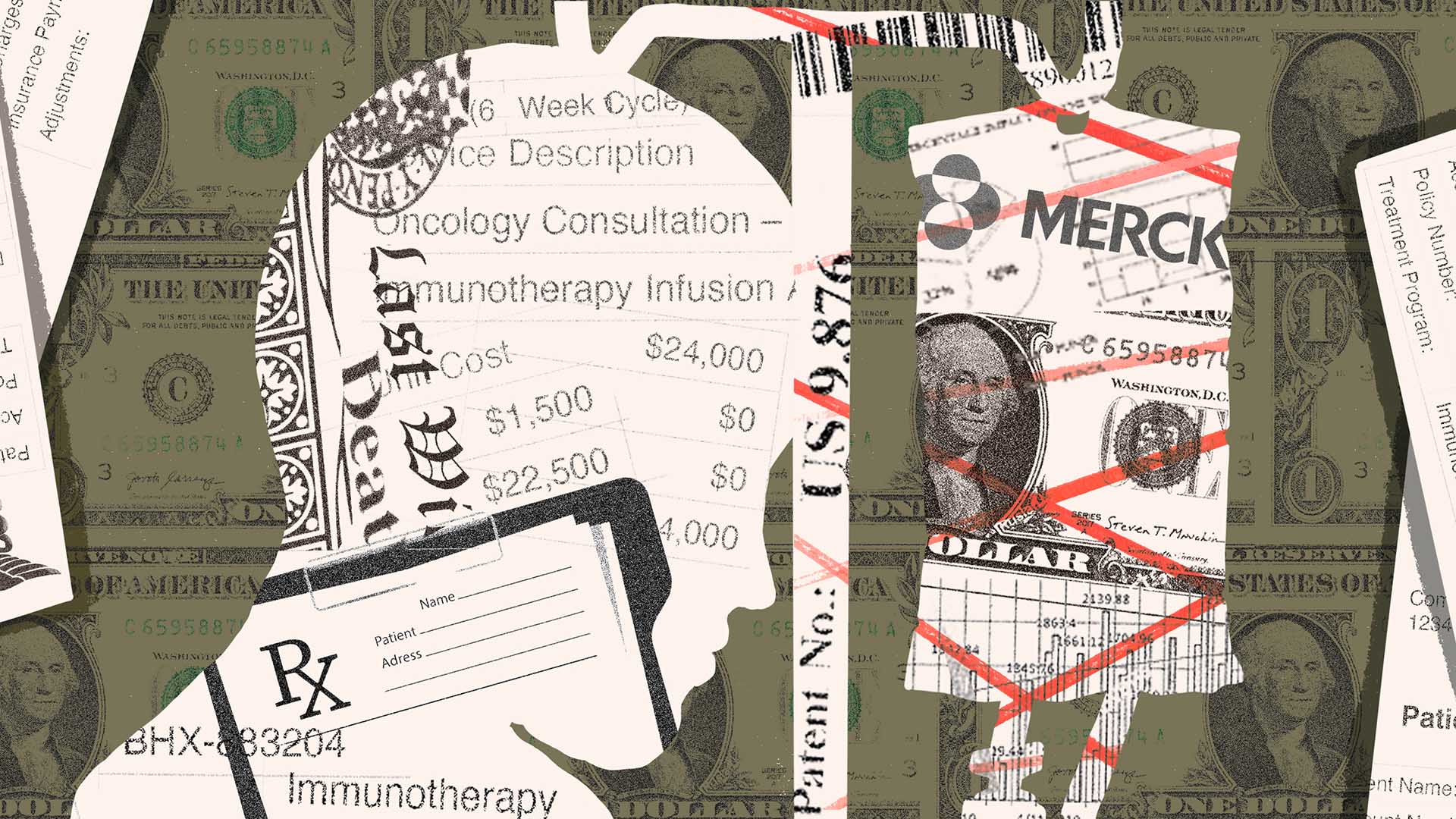
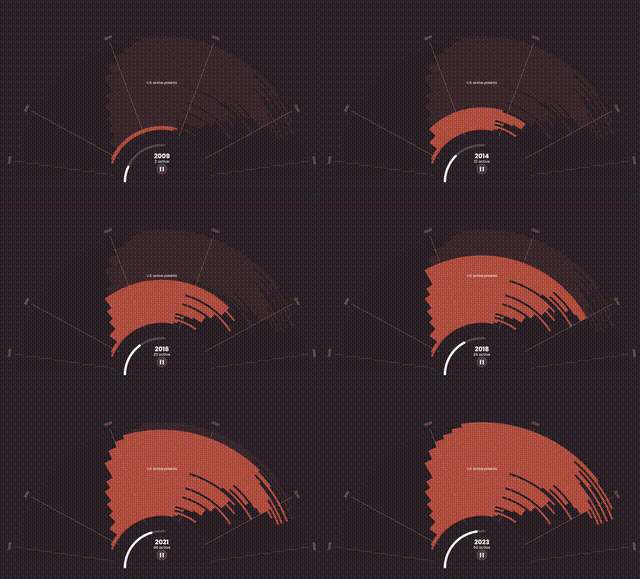
The Cancer Calculus, an investigation by ICIJ and 47 media partners published in April, shows how Merck has kept the price of the lifesaving drug sky-high by building a fortress of patents to deter competition and through opaque pricing. In the U.S., for example, a 200 mg dose of Keytruda costs $12,000, according to an ICIJ analysis.

As soaring prescription drug costs remain a major concern in America and throughout the world, President Donald Trump has repeatedly promised sweeping reductions in costs, including for cancer treatments. Last year, Trump signed confidential deals with dozens of pharmaceutical companies, including Merck, to lower the price of some prescription drugs. But a recent Senate report found that high-cost medications have only become more expensive.
The cost of Keytruda, which accounts for nearly half of Merck’s revenue, rose to $210,000 for one year of treatment under Trump — a 6% increase since last year, the Senate report found. The price of its main competitor, Bristol Myers Squibb’s Opdivo, rose by 4% under Trump, and Johnson & Johnson’s Darzalex, another immunotherapy drug, saw a 6% price increase.
Such high prices have contributed to vast disparities in access and affordability worldwide as cancer rates keep escalating globally.
Billions in savings
A preliminary study submitted during the ASCO conference by researchers at the University of Chicago looked into Keytruda and other high-cost cancer immunotherapies and targeted therapies. The researchers found that 21 out of 29 FDA-approved drugs might work just as well with lower doses or less frequent treatment. This could save an estimated $40,000 to $240,000 per patient each year and up to $31.1 billion worldwide.
The study is based largely on publicly available information about the drugs, including data published by the FDA, which was used to analyze how the medications behave in the body, explained post-doctoral researcher Mohammed Ali, one of the authors. The analysis showed that some cancer antibody drugs — drugs that help the body find and attack cancer cells — stay in the body for a long time. This suggests that, in some cases, patients could take treatment less often while still maintaining high enough drug levels to work effectively.
Ali said the project is part of larger research efforts on optimizing cancer drug dosing and is funded by Arnold Ventures, a U.S.-based philanthropy. The researchers plan to extend the analysis to dozens more cancer drugs, said Mark J. Ratain, a professor of medicine at the University of Chicago and coauthor of the study.
The preliminary study across major cancer drugs found the biggest potential savings from using lower or less frequent doses in four medicines. A combined $6.63 billion could be saved worldwide on Avastin and Tecentriq, manufactured by Roche/Genentech, each year. And Opdivo could yield $2.7 billion in global savings. Roche/Genentech and Bristol Myers Squibb did not respond to requests for comment.
The researchers highlighted Keytruda (known generically as pembrolizumab) as the biggest contributor to potential savings: more than $14 billion per year globally with lower or less frequent doses.
Julie Cunningham, Merck’s director of global media relations, said in a statement to ICIJ that while “Strategies to save healthcare costs are vital … It is more vital to provide appropriate care to patients, especially for potentially life-changing drugs such as pembrolizumab. In a life-threatening and challenging disease such as cancer, it is critical that the dosing for a cancer therapy is established through well-designed clinical trials evaluating the effectiveness and safety of the therapy.”
That’s precisely what researchers are doing in India, where one month of Keytruda can cost more than 12 months of wages, according to one survey. For the past nine years, doctors there have been conducting randomized clinical trials testing low-dose immunotherapies on hundreds of patients.
“We found that by lowering the dose, we can expand access by 50 to 60%, but when we use the higher dose, only five percent of patients can get the drugs,” said Kumar Prabhash, a top oncologist at Tata Memorial Hospital in Mumbai.
Airtime at ASCO
At the ASCO conference, some of Prabhash’s colleagues presented at least two studies about their research. One of the studies tested whether a lower dose of Keytruda could still help patients with a form of advanced non small-cell lung cancer when added to standard chemotherapy. For the trial, 380 patients were split into two groups. One group received chemotherapy alone, and the other received chemotherapy and a low dose of Keytruda (50 mg every 3 weeks for the first 4 doses, then 50 mg every 6 weeks after that).
According to the study, patients who received the combination lived longer and had slower cancer growth. Side effects were similar overall, with a small increase in some blood and lung-related issues. But in her presentation, Nandini Menon, an oncologist at Tata Memorial, said that using lower doses could make the treatment more accessible in settings where cost limits patient access. Menon called the regime tested in the clinical trial “an affordable new standard of care treatment option.”
Another study involving more than 400 patients compared standard chemotherapy with a low-cost oral drug combination and a very low dose of Opdivo, known generically as nivolumab. An abstract published at ASCO says the new treatment helped patients with advanced head and neck cancer live longer, slowed the disease progression and caused fewer serious side effects overall. Opdivo’s manufacturer, Bristol Myers Squibb, did not respond to ICIJ’s requests for comment.
During a debate at the conference, which is partly sponsored by large pharmaceutical companies, attendees welcomed the fact that lower immunotherapy dosing was being addressed at the event. Ratain, the University of Chicago professor, said it was “about time” that the information got “some airtime publicly at this meeting.”
In an interview from Mumbai, Prabhash said he was pleased with the needed attention, since it is challenging to get funding for research that tests the effectiveness of lower dosage. “This is only possible because of support from the hospital, philanthropies and donations from NGOs,” he said.
At popular medical conferences, Prabhash added, priority may be placed on research “coming from the Western world,” but “for us, we think this is far more relevant because it allows treatment for a larger part of the world that has no access.” In India, Merck offers financial aid to some patients receiving Keytruda, but only for the full high dose.
After the ASCO debate last week, Lobna Sedky, an oncologist from Egypt, approached the microphone. She didn’t have a question for the panelists, she said, but noted that in countries such as Egypt, where most cancer care is funded by the government or insurers, immunotherapy is available but not affordable for all patients. She said the discussion at the conference could help efforts to persuade national health authorities to support lower-dose, more affordable treatment strategies.
The findings at the conference, she said, “will give us the strength to persist and request our [Ministry of Health] and the national health council to proceed for less dose and to sponsor it and support it.”
Editor’s note: Arnold Ventures has been a funder of ICIJ. Funders have no involvement in ICIJ’s editorial decisions.