The United States has revoked tourist visas for five board members at La Nación, Costa Rica’s most influential newspaper, in what critics are calling an “unprecedented” measure that could have a “chilling effect” on free speech in the Central American nation.
Over the weekend, Pedro Abreu, CEO and chairman of the board of Grupo Nación, the holding company that owns the newspaper, started getting messages from friends with links to local media reports. Three outlets claimed that he, along with four other board members, had had their U.S. tourist visas revoked.
“One of the media outlets even stated our names, our dates of birth, and the expiration dates of our visas,” Abreu told the International Consortium of Investigative Journalists, adding that he was in disbelief. “I checked my email, looked to see if I had any calls or anything, but I had no official communication. After a while, I searched on a U.S. government website, I put in my visa information and there I saw. It came up as revoked.”
Under President Donald Trump, the U.S. State Department has revoked visas of lawmakers, government officials and judges from Mexico, Colombia, Brazil and Costa Rica over a range of accusations from organized criminal activities to “witch hunts” of Trump’s political allies. Costa Rica is the only country where the U.S. government has targeted owners and executives at media outlets. (In October, the U.S. revoked the tourist visa of the owner of a digital outlet who was under investigation for money laundering.)
The State Department did not respond to questions sent by ICIJ.
Costa Ricans are required to apply for tourist visas to enter the U.S., which grants them entry for years at a time. Five of Grupo Nación’s seven board members had their visas revoked; the other two hold passports from countries that allow them to enter the U.S. without one, said Fabrice Le Lous, La Nación’s editor in chief. “And there is one common denominator among them: that they were given absolutely no reason or explanation,” he said.
The Trump administration has used visas as a reward and a punishment in its efforts to persuade nations to accept U.S. deportees from other countries. In September, after Ghana agreed to take deportees, the U.S. lifted visa restrictions on the country. It is not clear whether the visa revocations in Costa Rica are connected to the April agreement outgoing President Rodrigo Chaves signed with the U.S. to accept up to 25 deportees a week.



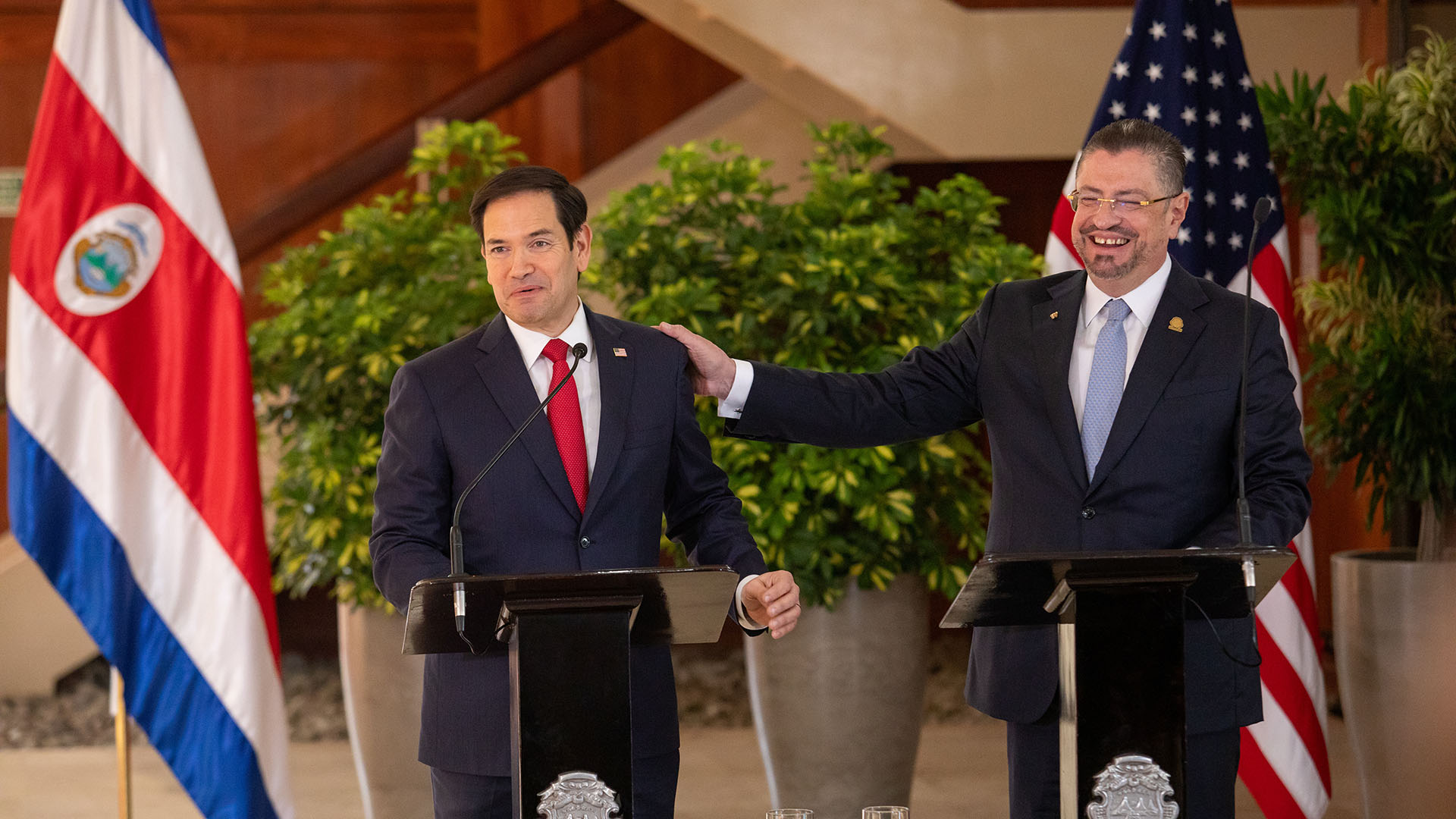
During his term, which ends May 8, Chaves has become an ally of Trump and issued a decree that bars China and other countries not aligned with the U.S. from bidding on telecommunications contracts.
Chaves has targeted La Nación since his election campaign in 2022, promising that if he won the presidency, his team would “cause the destruction of the corrupt structures of La Nación”. Between 2021 and 2022, La Nación published a series of exposés about Chaves’ alleged sexual misconduct against colleagues during his time working at the World Bank, where he was reprimanded.
On Monday, the Inter American Press Association president Pierre Manigault said: “The use of administrative tools without clear explanations, in cases involving media outlets, generates concern and may have a chilling effect on the practice of journalism.”
In April 2025, Costa Rican Nobel Peace Prize winner Óscar Arias said in a news conference that he had received an email from the U.S. government saying his tourist visa was revoked. He had criticized Trump on social media just months before. Opposition lawmakers had also recently had their visas revoked.
Asked in a television interview on Monday if he had anything to do with these revocations, president Chaves laughed and evaded the question, saying: “If this were true, then that would make me the president with the most influence over the most powerful country in the world.”
The Costa Rican government did not respond to ICIJ’s request for comment.
On April 30, Reporters Without Borders (RSF) lowered Costa Rica two notches down in its World Press Freedom Index. “Freedom of the press and freedom of expression are two highly respected principles in Costa Rica, an exception in Latin America,” the organization said. “Nevertheless, there has been a steady increase in violations of press freedom in recent years and the government of President Rodrigo Chaves Robles has restricted access to public information.”
CEO Abreu is married to an American and has family living in the U.S., including his father, who he visits twice a year. He also attended graduate school at Boston University.
“This is more important than something personal to me. While it is true that we, the members of the board of directors, are affected, the message is clear,” he said. “It is an attack on the media outlet.”