
About the China Capital investigation
A global investigation by ICIJ lays bare the hidden playbook of one of China’s most powerful banks.
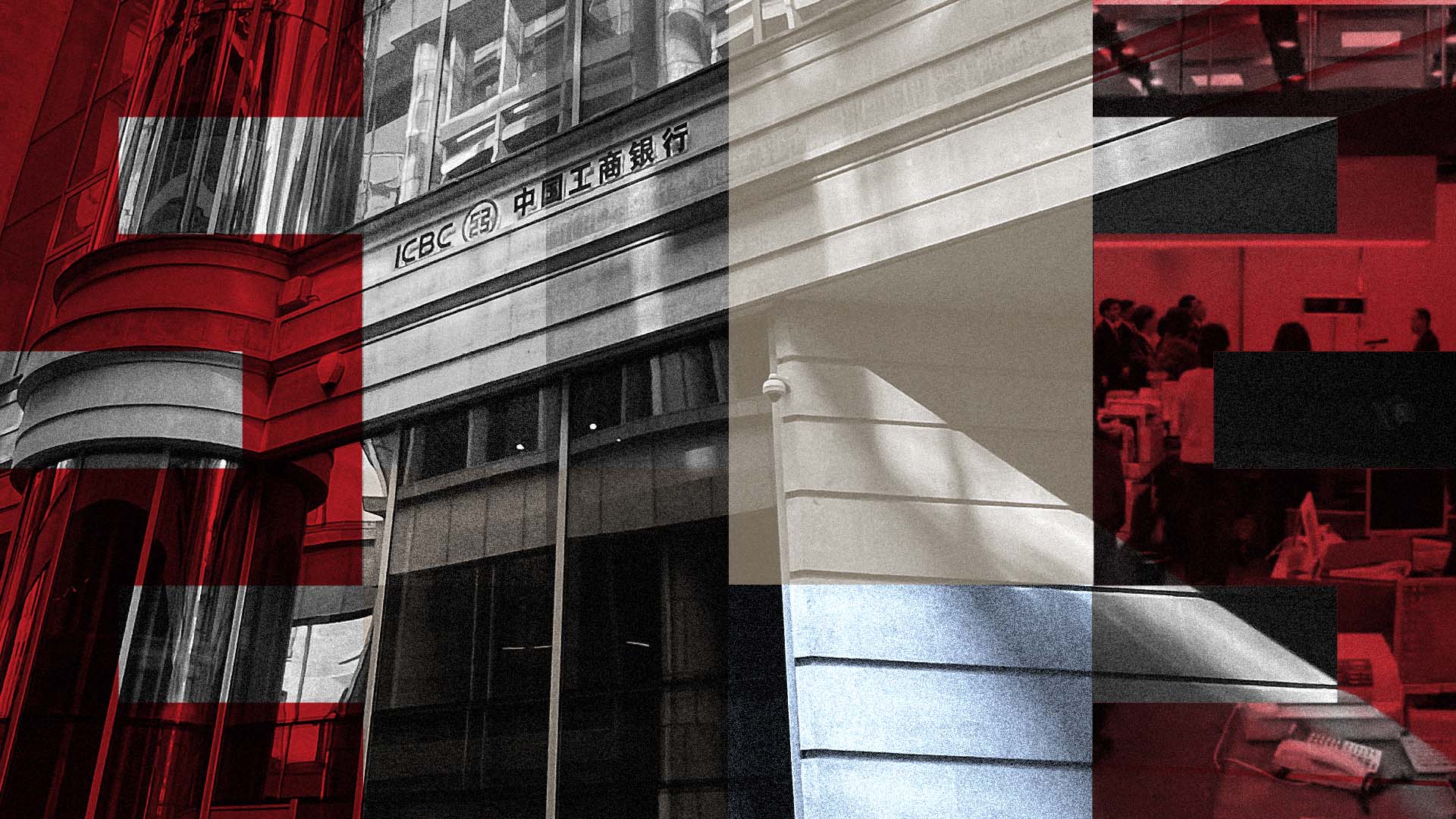
China Capital is a cross-border investigation led by the International Consortium of Investigative Journalists that exposes how the world’s biggest bank, the Industrial and Commercial Bank of China, maneuvers behind closed doors to help Beijing achieve its geopolitical goals.
Based on a trove of 4.8 million ICBC records, the investigation reveals that ICBC used its London operations as a financing hub for companies linked to sanctioned Russian and Belarusian business owners, autocrats publicly accused of corruption, debt-ridden states and China’s political establishment. At times, the records show, the bank breached its own sanctions and anti-money laundering policies.
ICIJ’s investigation found ICBC officers in London acted at the direction of the bank’s Beijing headquarters to pursue explicitly political objectives for its majority shareholder, the Chinese state: cement alliances, acquire natural resources and expand control over communications, energy and transportation infrastructure globally. ICBC is the world’s largest bank by asset size.
Among the findings, China Capital reveals that with Russia’s war in Ukraine raging, ICBC stepped up to help Russian mining giant Norilsk Nickel, aka Nornickel, a company partly owned by four sanctioned oligarchs aligned with the Kremlin. Documents show ICBC bankers discussing ways to finance the firm in renminbi, the Chinese currency, to avoid U.S. dollar transactions, and applauding Nornickel’s idea of building a smelting plant in China to label their products Chinese.
The confidential documents, while offering only a glimpse into the lender’s operations, reveal the bank served a surprising number of clients linked to autocrats, oligarchs and Chinese companies with political connections. Among the clients: a bank owned by the daughters of Ilham Aliyev, Azerbaijan’s longtime authoritarian ruler; Angola’s state oil company, then controlled by cronies of dictator José Eduardo dos Santos; and a Chinese company that partnered with a Belarusian firm sanctioned by the European Union for its ties to Alexander Lukashenko’s regime.
The investigation found that ICBC London continued to bank — and make exceptions for — high-risk clients even after authorities in more than a dozen countries expressed concerns about ICBC’s compliance and anti-money laundering practices.
China Capital reveals that in early 2019, not long after the U.S. Justice Department indicted Huawei for allegedly violating sanctions on Iran and other crimes, ICBC bankers moved with remarkable speed, transferring a staggering $1.3 billion in “emergency cash” for the tech giant. The transaction, while not illegal, triggered a wave of recriminations and infighting at the bank, particularly from its own financial crime prevention unit, which was not told about the move ahead of time.
Beyond the bank’s walls, ICBC has also had its share of run-ins with governments and courts for not following banking rules, including monitoring potentially illicit flows. An ICIJ analysis shows that since 2014 courts and regulators in eight jurisdictions have hit the bank and its overseas branches and subsidiaries with adverse court rulings and penalties totalling at least $96 million. The confidential records also show that ICBC executives were aware of compliance issues at its units in the U.K. and other countries.
An ICIJ-led investigation in collaboration with media partners in 24 countries, China Capital also lays bare what experts describe as the bank’s “muscular” lending tactics, which have burdened some of Africa’s most economically vulnerable states.
In 2011, the bank signed a loan with ZESCO, the Zambian state-owned power company, for $285 million. Seven years later, as the drought-stricken nation of 18 million was barreling toward sovereign default, ICBC came for its first payment of $20 million. This was just after ZESCO had paid the bank $15 million in “management fees” for a separate loan that “put some pressure on the company’s financial situation.” But the utility had little recourse; Zesco had already set up an account at ICBC London for the $285 million loan. Keen to collect the first payment, ICBC headquarters pushed officers in the U.K. to take the money out of Zesco’s account and send it to Beijing before ICBC London had completed the necessary checks on the client, as required by the bank’s compliance policy.
Meanwhile, few outside the bank and the government knew the extent of Zambia’s indebtedness to ICBC and other Chinese banks. The lack of transparency paralyzed debt relief efforts, triggering a financial crisis in 2020 that tanked the value of its currency and made daily staples unaffordable for an already impoverished population.
China Capital’s rare view of ICBC’s inner workings comes from the confidential archives of the bank’s London branch and a U.K. subsidiary, dated between 2005 and 2024 — a span when China ascended on the world stage and President Xi Jinping rose to power.
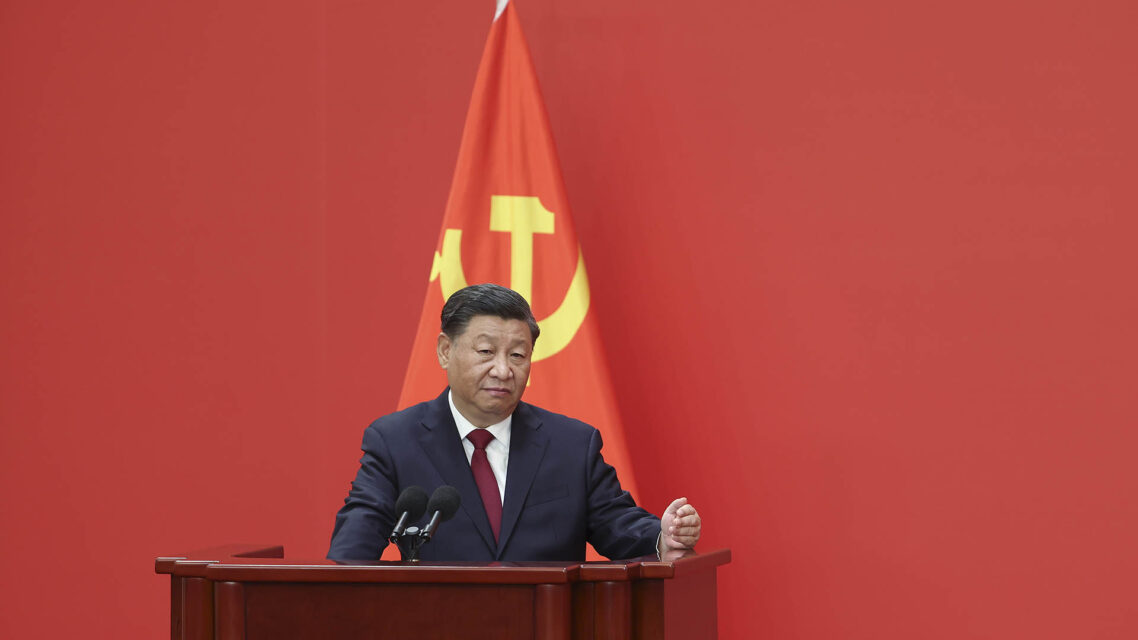
The trove includes reports marked as trade secrets; internal emails in English and Chinese; confidential dossiers and lists on more than 4,000 corporate clients; meeting minutes; suspicious transaction logs; and directives from the bank’s Communist Party committee, an internal cell that facilitates party activities and advances government policies.
ICIJ also analyzed agreements related to about 200 loans which ICBC London committed to provide — alone or in coordination with other banks — to nearly 200 borrowers. Among them were the Zambian government and companies headquartered or operating in about 30 countries — including the U.K., South Africa, Luxembourg and some offshore financial centers. The ICBC London loan amounts found in the data ranged from about $3 million to $400 million and were mostly for firms in commodity trading, energy and financial services.
The records highlight the hybrid nature of ICBC, a commercial bank that often appears to act like a development bank, contributing to China’s rise as the largest nondemocratic actor in global finance. The bank helped Chinese state firms secure lucrative contracts overseas, financing the acquisition of key transportation, energy and telecommunications infrastructure in foreign countries. Its clientele included companies and individuals accused of corruption, environmental violations, theft of trade secrets and harmful market practices by courts or regulators in other countries. ICBC also loaned millions to foreign state entities as a way to boost China’s alliances and economic power. As is the case for many other Chinese banks, though, ICBC’s lending activities have remained opaque.
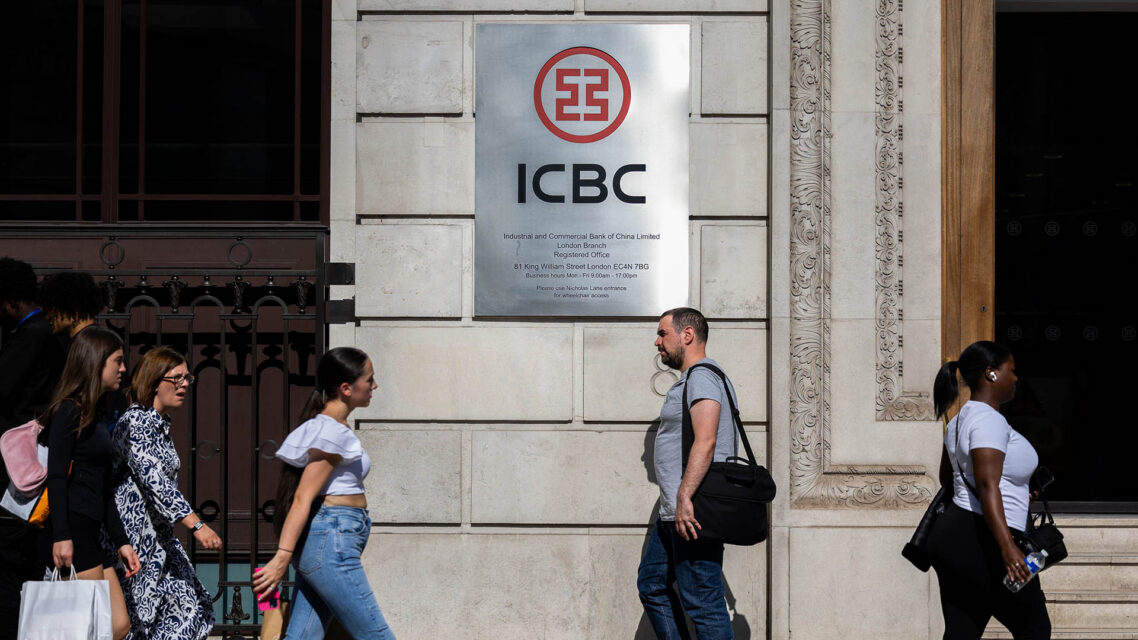
Through a spokesperson, the Chinese government said it rejects “false narratives” of “opaque lending.” A representative of China’s Embassy in Zambia told ICIJ in a statement that China “strictly” follows market rules and international norms and “never forces borrowing, presses for repayment, attaches political conditions to loan agreements, or seeks political interests.”
ICBC did not respond to ICIJ’s repeated requests for comment. A Times reporter personally delivered media partners’ questions to the bank’s London office as well but didn’t receive any response.
China Capital provides an unprecedented look at how Beijing has used one of its most powerful financial arms to fulfill its global ambitions.
The China Capital investigation is brought to you by:
The ICIJ team
Director: Gerard Ryle
Managing editor: Fergus Shiel
Deputy managing editor: Annys Shin
Lead reporter and partnership coordinator: Scilla Alecci
Senior editors: Whitney Joiner, David Rowell, Dean Starkman
Editor: Joanna Robin
Head of data and research: Delphine Reuter
Deputy head of data and research: Karrie Kehoe
Data and research team: Denise Ajiri, Agustin Armendariz, Jelena Cosic, Jesús Escudero, Miguel Fiandor Gutiérrez
Reporter: Micah Reddy
Associate editors and fact checkers: Kathleen Cahill, Richard H.P. Sia
Copy editor: Angie Wu
Head of digital and product: Hamish Boland-Rudder
Digital editor: Carmen Molina Acosta
Web developer: Antonio Cucho Gamboa
Social media producer: Daniela Vivas Labrador
Chief technology officer: Pierre Romera Zhang
Deputy chief technology officer: Caroline Desprat
Technology team: Soline Ledésert, Bruno Thomas, Maxime Vanza Lutonda, Whitney Awanayah, Javier Ladrón de Guevara, Carolina Verónica López Cotán, Clément Doumouro, Marie Gillier
Design and illustration: Ben King
Training manager: Jelena Cosic
The investigation team
- Fiona Buffini (Australian Financial Review) Australia
- Gerard Ryle (ICIJ) Australia
- Hamish Boland-Rudder (ICIJ) Australia
- Lucy King (Australian Financial Review) Australia
- Peter Ker (Australian Financial Review) Australia
- Josef Redl (profil) Austria
- Stefan Melichar (profil) Austria
- Aliaksei Ivashkevich (Belarusian Investigative Center) Belarus
- Alina Yanchur (Belarusian Investigative Center) Belarus
- Stanislau Ivashkevich (Belarusian Investigative Center) Belarus
- Sviatlana Yatskova (Belarusian Investigative Center) Belarus
- Delphine Reuter (ICIJ) Belgium
- Kristof Clerix (Knack) Belgium
- Lars Bové (De Tijd) Belgium
- Atanas Tchobanov (Bird) Bulgaria
- Bruno Thomas (ICIJ) France
- Caroline Desprat (ICIJ) France
- Clément Doumouro (ICIJ) France
- Dean Starkman (ICIJ) France
- Guillaume Daudin (Le Monde) France
- Louis Schimchowitsch (ICIJ) France
- Marie Gillier (ICIJ) France
- Maxime Vanza Lutonda (ICIJ) France
- Nicholas Norbrook (The Africa Report) France
- Pierre Romera Zhang (ICIJ) France
- Soline Ledésert (ICIJ) France
- Christoph Giesen (Der Spiegel) Germany
- Frederik Obermaier (paper trail media) Germany
- Sophia Stahl (paper trail media) Germany
- Emmanuel K Dogbevi (Ghana Business News) Ghana
- Kent Mensah (The Africa Report) Ghana
- Jay Mazoomdaar (The Indian Express) India
- Ritu Sarin (The Indian Express) India
- Shyamlal Yadav (The Indian Express) India
- Karrie Kehoe (ICIJ) Ireland
- Angelo Mincuzzi (L’Espresso) Italy
- Gloria Riva (L’Espresso) Italy
- Leo Sisti (L’Espresso) Italy
- Scilla Alecci (ICIJ) Italy
- Ling Fong Ng (Malaysiakini) Malaysia
- Qistina Nadia Dzulqarnain (Malaysiakini) Malaysia
- Isabella Cota (ICIJ) Mexico
- Mathieu Tourliere (Proceso) Mexico
- Gaby de Groot (Financieele Dagblad) Netherlands
- Johan Leupen (Financieele Dagblad) Netherlands
- Justin Wong (The Post/Stuff) New Zealand
- Micael Pereira (Expresso) Portugal
- Jelena Cosic (ICIJ) Serbia
- Leanne de Bassompierre (The Africa Report) South Africa
- Micah Reddy (ICIJ) South Africa
- Carolina Verónica López Cotán (ICIJ) Spain
- Javier Ladrón de Guevara (ICIJ) Spain
- Jesús Escudero (ICIJ) Spain
- Miguel Fiandor Gutiérrez (ICIJ) Spain
- Tobias Andersson Åkerblom (Göteborgs-Posten) Sweden
- Peihua Lu (CommonWealth News) Taiwan
- Yishan Chen (CommonWealth News) Taiwan
- Agustin Armendariz (ICIJ) U.S.
- Angie Wu (ICIJ) U.S.
- Annys Shin (ICIJ) U.S.
- Antonio Cucho Gamboa (ICIJ) U.S.
- Carmen Molina Acosta (ICIJ) U.S.
- Daniela Vivas Labrador (ICIJ) U.S.
- David Rowell (ICIJ) U.S.
- Denise Ajiri (ICIJ) U.S.
- Fergus Shiel (ICIJ) U.S.
- Jacob Silverman (ICIJ) U.S.
- Joanna Robin (ICIJ) U.S.
- Kathleen Cahill (ICIJ) U.S.
- Richard H.P. Sia (ICIJ) U.S.
- Whitney Awanayah (ICIJ) U.S.
- Whitney Joiner (ICIJ) U.S.
- George Greenwood (The Times) UK
- Warren Thompson (Finance Uncovered) UK
- Charles Mafa (Makanday) Zambia