OFFSHORE
Trump intelligence adviser previously helped father pursue millions from Kremlin-linked bank, leaked documents show
Amaryllis Fox Kennedy, who recently stepped down from two senior administration posts, was serving as a CIA officer during the dispute.
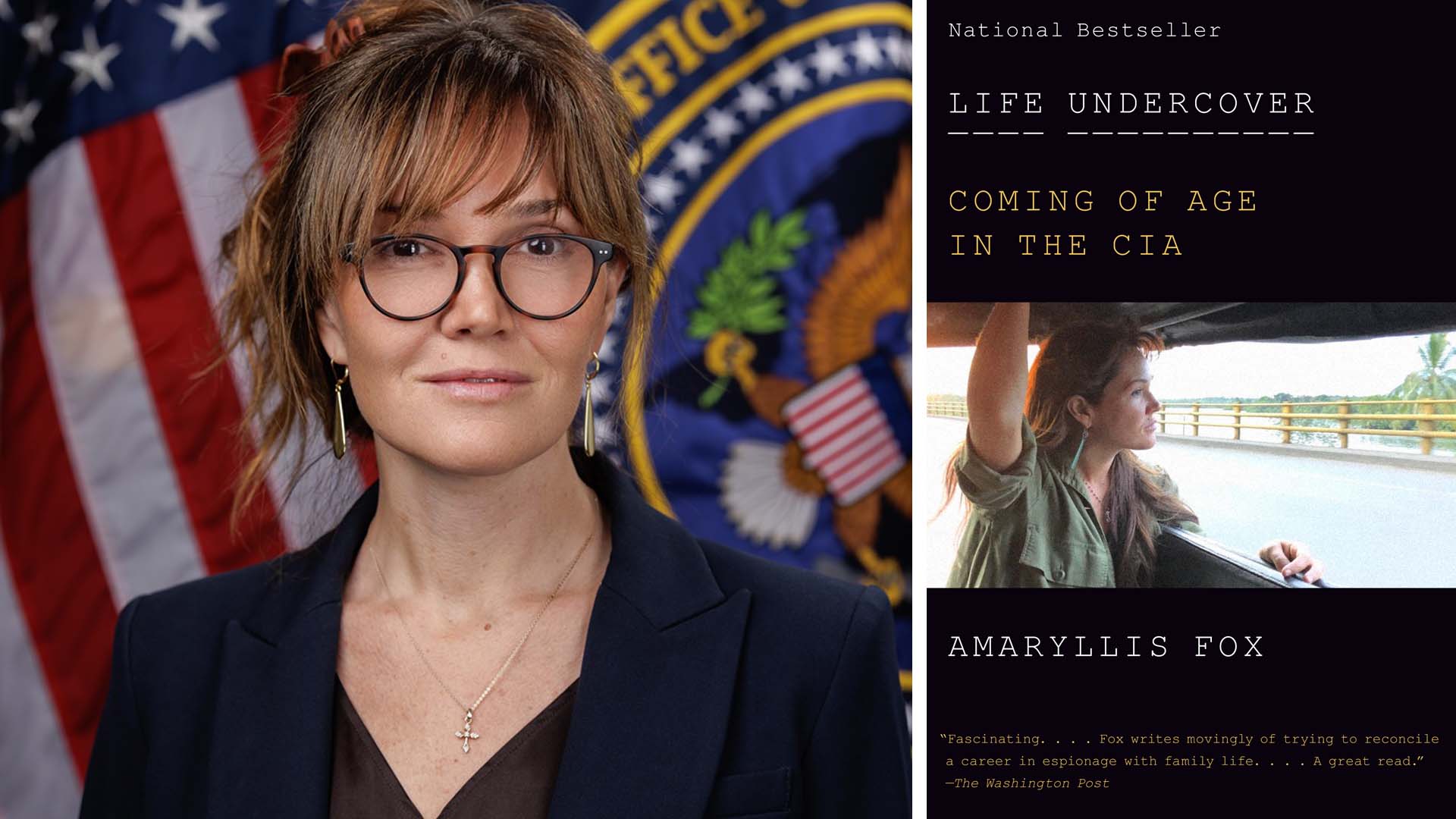
Amaryllis Fox Kennedy, a Trump administration adviser on intelligence issues who recently stepped down from two senior national security positions, previously helped her father secure at least $12 million from a Russian investment bank that cooperated with the Kremlin, leaked documents show.
Kennedy, a former CIA officer, was involved in the deal in 2009 and 2010 as head of an offshore corporation owned by her father. She was employed as a spy during those years, according to media reporting.
The documents show that as president of the British Virgin Islands-registered Helios Enterprises Limited, Kennedy was involved in an effort on behalf of her father, Hodson Thornber, to pressure a Moscow-based investment bank to fulfill a 2008 agreement to pay roughly $30 million for Helios’ shares in a large Ukrainian agricultural company. The Russian bank, Renaissance Capital, included former senior Russian intelligence officers in its top ranks.
Kennedy told ICIJ that she was appointed Helios’ president as she was preparing to leave government service, and in that position worked with her father to identify investments in consumer technology startups. She said that any involvement she had in the dispute with Renaissance Capital was “pro forma,” and that she “had no knowledge of or involvement in” the dispute or the business project in general.
“I lived in the United States the entire time I worked for Helios and never worked on any deals related to the farm business or Ukraine,” she wrote. “I’ve never met any of the people involved, nor ever visited Ukraine.”
She is also the daughter-in-law of Health and Human Services Secretary Robert F. Kennedy Jr. and managed his 2024 presidential campaign. In one podcast appearance, he called her “the smartest person I’ve ever met.”

Until recently, Kennedy had been serving simultaneously as a deputy director in the Office of the Director of National Intelligence, associate director for intelligence for the Office of Management and Budget, and as a member of the President’s Intelligence Advisory Board. She resigned from her roles at ODNI and OMB, but plans to maintain her role on the advisory board, which provides independent advice on the effectiveness and legality of U.S. spy programs.
Thornber, a University of Chicago-trained economist, had worked as managing director of an arm of Renaissance Capital and guided the firm’s investment in the Ukraine venture. The $12 million received by Helios was Renaissance’s payment for roughly 40% of its shares. The documents do not provide a full accounting of what Renaissance paid for the remaining shares.
In an interview with ICIJ, Thornber said he was aware Kennedy was in the CIA while she was president of Helios, but that she did not discuss her work as an intelligence officer. He said that she “may have signed letters” related to the dispute with Renaissance Capital, but “I don’t think she was particularly deeply involved.”
Thornber declined to provide an exact figure for what he was paid by Renaissance Capital. “We had a contract, I enforced it, and they paid,” he said.
The documents come from the Paradise Papers, a collection of over 13 million documents originating from the law firm Appleby that formed the basis of a 2017 investigation by ICIJ and its partners.
The CIA declined to comment for this story, and it is unclear if the intelligence agency knew of Kennedy’s outside work. Renaissance Capital did not reply to a request for comment.
Kennedy has stridently opposed U.S. support for Ukraine.
In a 2024 post on X, she described the Biden administration’s backing for the country as part of a plot to control Ukrainian natural resources, saying hedge funds were “carving up rights to Ukraine’s fertile soil and vast natural resources” as a result of the Biden policy.
A March 2025 profile by RealClearPolitics portrayed her as cheering from her office across from the White House when Trump accused Ukrainian President Volodymyr Zelensky of being disrespectful of the United States during a contentious Oval Office meeting.
In a post on X, Kennedy said that she was rejoining the private sector because she needed to keep her family “financially on track.” She also praised Trump as a “brilliant tactician and tough negotiator.”
Her involvement in the Renaissance Capital deal, reported here for the first time, was highly unusual for a CIA officer, said former intelligence officers.
“The intelligence community is particularly neuralgic about Russian individuals, Russian entities, any Russian nexus,” said Peter Schroeder, a former U.S. intelligence officer specializing in Russian security policy, speaking in general terms rather than about Kennedy’s work.
There is no evidence that the deal with Renaissance Capital played any role in Kennedy’s resignation from her positions within the Trump administration.
Founded in the mid-1990s, Renaissance Capital has long had links to the Kremlin. In 2007, bank executives secretly awarded a stake in the firm to a close associate of Russian President Vladimir Putin, a Reuters investigation found. Its senior management at the time of the wrangling over payment to Helios included at least one high-ranking former Russian intelligence official and at least two other ex-KGB officers held top positions there in the mid-2000s, according to media reports.
“Renaissance Capital was crawling with ex-KGB people throughout my time in Moscow,” said Bill Browder, a financier who headed Hermitage Capital Management, Russia’s former biggest foreign investor. “Everyone had their own strategy for how to survive and [Renaissance Capital’s] strategy was to collaborate with the state.”
Kennedy told ICIJ that her work at Helios had nothing to do with her career in the U.S. government, and that she did not “receive any salary for any job until I had left government service.”
Life undercover
Kennedy published an unauthorized 2019 memoir of her career in the CIA, “Life Undercover.” In the book, she said she joined the CIA around 2002, when it was flooded with young recruits in the aftermath of the September 2001 terrorist attacks.
She worked as an analyst on Southeast Asia terrorist groups and then was chosen to be a CIA case officer deployed overseas, the memoir says.
She wrote that she worked as a CIA officer in Shanghai in the late 2000s, under the guise of being an art dealer. Kennedy said she worked under “non-official cover,” a designation for spies who pose as businesspeople, academics and the like — rather than as diplomats or other U.S. officials. The work is considered risky because, if caught, NOCs, as they are known, cannot claim diplomatic immunity.
In the book, Kennedy mentions working for the CIA in 2009, a time when she was president of Helios.
She does not provide the date of when she left the intelligence agency.
One February 2009 document obtained by ICIJ included an email address for Kennedy ending in “heliosinchina.com.” Kennedy told ICIJ that Helios in China was part of “a hobby project” created by her father that they could share together. Helios applied in 2009 to the U.S. Patent and Trademark Office for a trademark of the logo of a Chinese art business. An archived website says the firm was founded in 2007 and describes Kennedy as the CEO.
One former CIA official confirmed Kennedy’s account that she worked for the agency’s Counterterrorism Center in a division focused on preventing terrorists and other “non-state actors” from acquiring weapons of mass destruction. The counterterrorism center was the spy agency’s nerve center at the time, as the U.S. battled al-Qaida and other terrorist groups across the globe.
Kennedy’s memoir was published without approval from the CIA’s Publications Review Board, which is required to vet materials authored by former CIA officers to prevent the release of classified material. Kennedy said in 2019 that she submitted the memoir to the CIA review board but that it had been slow to respond.
The U.S. government has sued several former CIA employees who bypassed the review board and seized the profits from their books. There is no record of any legal action against Kennedy, who stands out among intelligence officers who published unauthorized books for later returning to a senior intelligence post.
She met Robert F. Kennedy III, the eldest son of the Health and Human Services secretary, at the Burning Man festival. The pair married at the Kennedy family compound in Hyannis Port, Massachusetts, in 2018.
Robert F. Kennedy Jr. appointed her campaign manager shortly after announcing his independent presidential bid. In a March 2025 federal financial disclosure, Amaryllis Fox Kennedy reported that she was paid $428,000 as her father-in-law’s campaign manager, and a fundraising commission of $235,000 from MAHA Action, a nonprofit group connected with the Make America Healthy Again movement.
After Trump’s 2024 election victory, Kennedy made a bid, supported by her father-in-law, to become the CIA’s deputy director. The idea was quashed by Republican lawmakers concerned about what they regarded as Kennedy’s dovish views on dealing with adversaries. “The only real way to disarm your enemy is to listen to them,” she once told Al Jazeera.
‘Highly detrimental to us’
According to the leaked documents, Kennedy served as president of Helios as early as January 2009. An ex-husband, Dean Fox, who Kennedy described in her memoir as a fellow CIA case officer, claimed in divorce filings to have served as Helios’s director of operations from 2008 to 2010. In that role, he wrote, he helped manage a $50 million “International Venture Capital fund” on behalf of Kennedy’s father, Thornber.
In the mid-2000s, Thornber oversaw Renaissance Capital’s investment in Ukrainian Agrarian Farms Ltd., which became one of the largest agricultural conglomerates in Ukraine, managing over 300,000 acres of farmland. By 2008, Thornber owned roughly 5% of UAFL — a stake he held through Helios.
In November 2008, Renaissance Capital agreed to purchase Helios’ shares in UAFL for roughly $30 million in three installments in 2008 and 2009. The deal came during the global financial crisis, which impaired banks worldwide and plunged Renaissance into crisis.
As the crisis unfolded, Thornber began to pressure the investment bank to make good on its commitment to buy his shares. In January 2009, Kennedy, as president of Helios, wrote to Renaissance Capital to formally request Thornber’s appointment to UAFL’s board of directors, which was Helios’s prerogative under the shareholders agreement.
Thornber said in an interview that he did not remember being appointed to UAFL’s board. Helios was dissolved in May 2025, according to British Virgin Islands corporate records.
According to the documents, Thornber used his position as UAFL director to demand access to correspondence and financial transactions related to his dispute with Renaissance. When the bank took too long to provide access to certain records, he sent his lawyers unannounced to the BVI offices of the firm’s corporate services provider to inspect them.
Weeks after his appointment as a UAFL director, his attorneys accused Renaissance Capital of triggering a clause in their 2008 agreement that required it to immediately purchase all of Helios’ shares. Renaissance Capital’s lawyers responded, copying Kennedy, denying they were obligated to do so and describing Helios’ conduct during the dispute as “highly detrimental to us.”
Renaissance Capital soon relented. “We are trying to have a constructive relationship with Helios,” one Renaissance executive, Sergey Bratukhin, wrote to the firm’s lawyers in March 2009. Five days later, he wrote that Renaissance Capital and Helios were on the verge of signing an agreement that “will solve all historical issues” between them.
Helios sold its shares to Renaissance Capital in three installments over 2009 and 2010.
Kennedy later benefited from her ties to Helios. She listed a $130,000 loan from Helios in 2014 court filings as she and Fox were divorcing.
Kennedy claimed in her divorce proceedings that most of the payments she received from Helios were loans from her father. Fox, now her ex-husband, argued in court filings that they were gifts and stated that during their marriage, Kennedy’s father, through Helios, “provided substantial monthly financial support to us on a recurring basis whenever we needed it to maintain a ‘comfortable’ lifestyle.”
In court filings, Kennedy described Fox’s claim that Helios payments during their marriage were gifts as a “complete fiction” and repeated to ICIJ that Fox’s claims were “false.”
In response to follow-up questions for this article, Kennedy replied: “Please, David, get a life.”