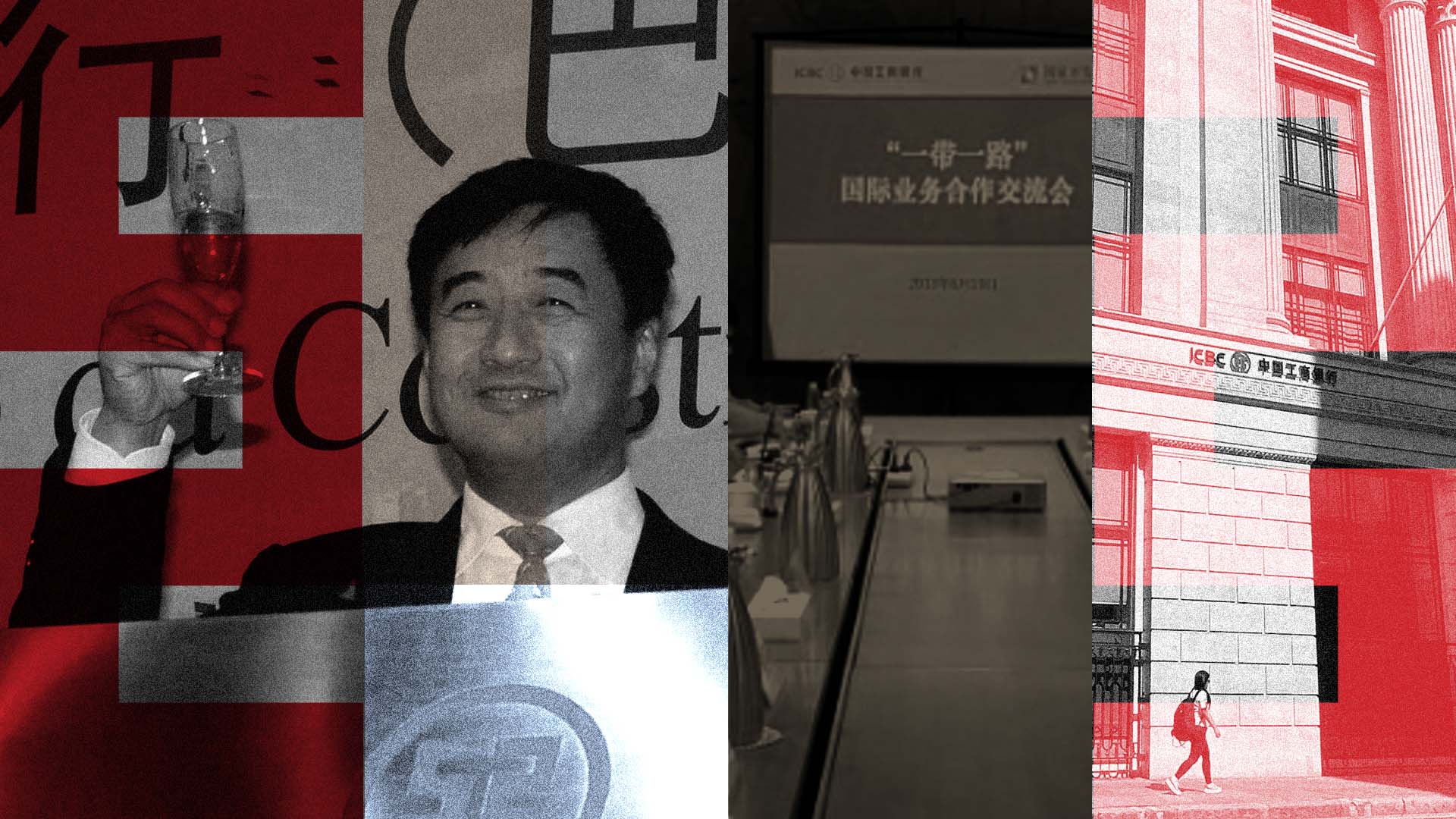
For many years, Zhang Hongli was the face of China’s banking might. A plugged-in networker who golfed with Beijing princelings, Zhang helmed the Asia units of Deutsche Bank and Goldman Sachs before becoming a senior executive vice president of the Industrial and Commercial Bank of China in 2010.
Just “ZHL” in some of ICBC’s internal communications, Zhang traveled the world to sign lucrative deals with new business partners, hobnob with corporate clients and meet bank staff, according to a trove of confidential records. He was a member of the Chinese Communist Party and of China’s top political advisory body, the Chinese People’s Political Consultative Conference. Some bank records refer to Zhang as “comrade.”
His rise continued even after his former employer, Deutsche Bank, filed a civil claim in 2014, alleging he had improperly transferred $3.9 million to a relative’s consulting company while heading the bank’s China unit. An internal investigation found that he had used the company to siphon off bank funds intended to secure a deal, records show. (The two sides were in settlement talks, Hong Kong media reported that year, but it is unclear how the case was resolved.)
Despite the troubling allegation by a high-profile plaintiff, ICBC promoted Zhang to executive director, and he went on to become a leading force of the bank’s international expansion.

In 2017, a Chinese state TV reporter congratulated him on the successful financing of projects linked to President Xi Jinping’s landmark infrastructure investment plan known as the Belt and Road Initiative and the disbursement of billions in loans around the world. In the interview, Zhang frankly acknowledged that ICBC sought political clout in the countries where the institution made its deals to benefit the Chinese state, its majority shareholder.
“Is China going to gain influence along the road? Of course,” Zhang said with confidence. “There’s nothing to be apologetic about from China’s perspective.”
Not long after, Zhang left the bank, and the limelight. Several years later, Chinese authorities shocked the financial world when they arrested him on bribery and other corruption charges spanning 11 years after he joined ICBC.
At the time, records show, the bank itself was struggling with corruption issues globally.
Confidential ICBC records reviewed by the International Consortium of Investigative Journalists show that, while Zhang’s case made international headlines, employee fraud, account padding and petty corruption were chronic inside the bank. The records show that bank executives were aware of governance problems within its ranks for years.
Internal audits by the bank’s Beijing headquarters, human resource officers’ reports and other records show compliance officers repeatedly reporting ethics violations and suspect behavior during a time when the banking giant was scrambling to set up hundreds of branches and subsidiaries as part of a global expansion.
ICIJ’s examination of ICBC’s governance is part of China Capital, an investigation that exposes the inner workings of one of China’s most influential financial institutions. The investigation, based on 4.8 million files from the archives of the bank’s London branch and a U.K. subsidiary, reveals how ICBC pursued deals considered strategic for Beijing even when they involved opaque companies linked to kleptocrats, oligarchs and China’s political establishment.
ICBC, majority owned by the Chinese state, is the world’s largest bank by asset size.
The persistent governance problems at ICBC’s overseas offices are part of a larger corporate culture that, ICIJ found, enabled bank officers to routinely flout conventional banking standards and internal checks when needed to advance Beijing’s agenda.
Zhang is one of at least three dozen ICBC employees that Chinese authorities have investigated over the past five years for alleged bribery, embezzlement, fraud or corruption while at the bank, ICIJ found. A Chinese news agency reported that, among Chinese banks in 2023, ICBC had the highest number of staffers under investigation for alleged corruption by local authorities. ICBC did not respond to reporters’ requests for comment.
Victor Shih, a political science professor at the University of California San Diego who has written extensively about China’s banking system, said that corruption is endemic in the country’s financial sector and is an unintended consequence of a system geared toward fulfilling state objectives rather than making money or complying with global standards.
“This is socialist banking, and profit doesn’t matter,” Shih told ICIJ. “The government will tell you how to make a loan,” he said. “Then you tell yourself: Well, okay, if the bank doesn’t care if it makes money or loses money, then I will take advantage of it also, right?”
Suspicions and errors of judgment
After Xi became president in 2013, his administration moved to strengthen the Communist Party’s authority over banks and root out corruption by imposing what experts call discipline inspections.
Daniel Koss, who teaches East Asian politics at Harvard University, described these inspections as “terrifying.” “While classic Western bank inspections look at books and numbers, these kinds of inspections are very political,” Koss told ICIJ.
The new inspection regime led to some of the internal audit records found in the China Capital cache but did little to actually deter corruption.
Those inspections, Koss said, are “first and foremost about loyalty to the party, not about giving out incorrect loans, and not even about stemming corruption.”
A 2015 inspection cited on the bank’s website found “nepotism,” abuse of power, embezzlement of customers’ funds, accounting irregularities and other issues at the bank’s domestic branches. The report also cited weak supervision of overseas units and identified unspecified violations by the leaders of four of those units. Five unidentified executives, the report said, had illegally obtained foreign citizenship or were “naked officials” — a term for officials suspected of stashing assets outside China because they had family members who lived overseas.
Confidential records from ICBC London’s archive provide details of how governance problems affected the bank’s prestigious outposts in the U.K., where the bank first opened a representative office in 1995, a subsidiary about a decade later, and then a full branch to serve large corporations.
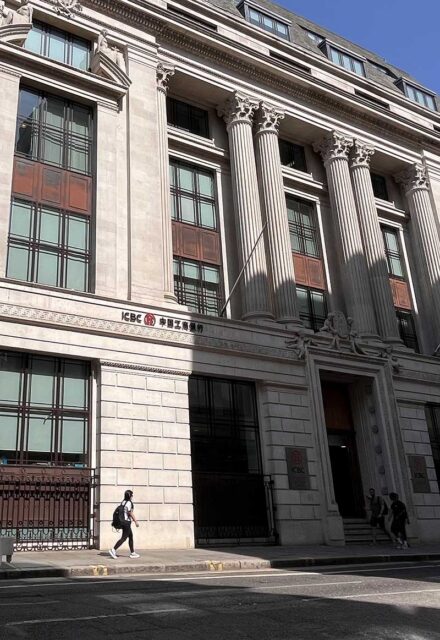
In 2015, about a year after U.K. authorities granted ICBC a license to open the London branch, the bank’s headquarters instructed officers to fill out a due diligence questionnaire to show regulators that ICBC globally was in compliance with all regulatory requirements.
A human resources officer soon flagged potential corruption issues among some bank employees.
“Certain rank-and-file employees (excluding management personnel) were suspected of bribery,” the officer wrote in the questionnaire. “While these individuals may face criminal penalties for the alleged bribery, this generally will not have a negative financial impact on our bank.”
Then in 2018, a senior ICBC London manager was found to have used an ICBC client account registered under the name China Red Cross to transfer funds to and from his personal ICBC account. Little else is known about the case or the account owner, but the London branch’s money laundering reporting officer wrote in a report that he had warned the manager that it was “a gross error of judgment.”
In 2019, an internal audit found that ICBC London bankers had twice extended “gifts and hospitality” — event tickets, meals and other perks that could represent a violation of anti-bribery laws — to government officials without requesting prior approval by the bank’s compliance unit. The employees were recommended for fraud awareness training, the records show.
Such cases frustrated officers in the financial crime prevention unit who lamented “general lack of progress” on compliance issues and “reluctance” by some of their colleagues to follow the unit’s advice, the money laundering reporting officer noted in a report for his managers. Citing tensions between ICBC’s internal compliance unit and bankers’ pursuit of business, he mentioned $1,200 for a golf event organized by Glencore, a trading giant and one of ICBC London’s most important clients. The proposition was “seen as too lavish and declined” by the financial crime prevention unit, the officer noted.
“It is evident that each Department requires a high degree of hand holding and engagement when dealing with financial crime matters,” he wrote in the English-language memo.
ICBC executives in Beijing were aware that the bank’s anti-money laundering standards were more lax than some of its international peers, records show.
In an internal presentation by the headquarters’ international business development unit dated 2018, the bank acknowledged that China was behind other countries in regulating the financial sector and that many of ICBC’s foreign units failed to ensure compliance with overseas regulations.
“A robust and comprehensive compliance system and culture have yet to be established,” the presentation said.
An ICIJ analysis found that, since 2014, regulators and courts in eight jurisdictions, including the U.S., Canada and Luxembourg, have hit the bank and its overseas branches and subsidiaries with adverse court rulings and penalties totalling at least $96 million.


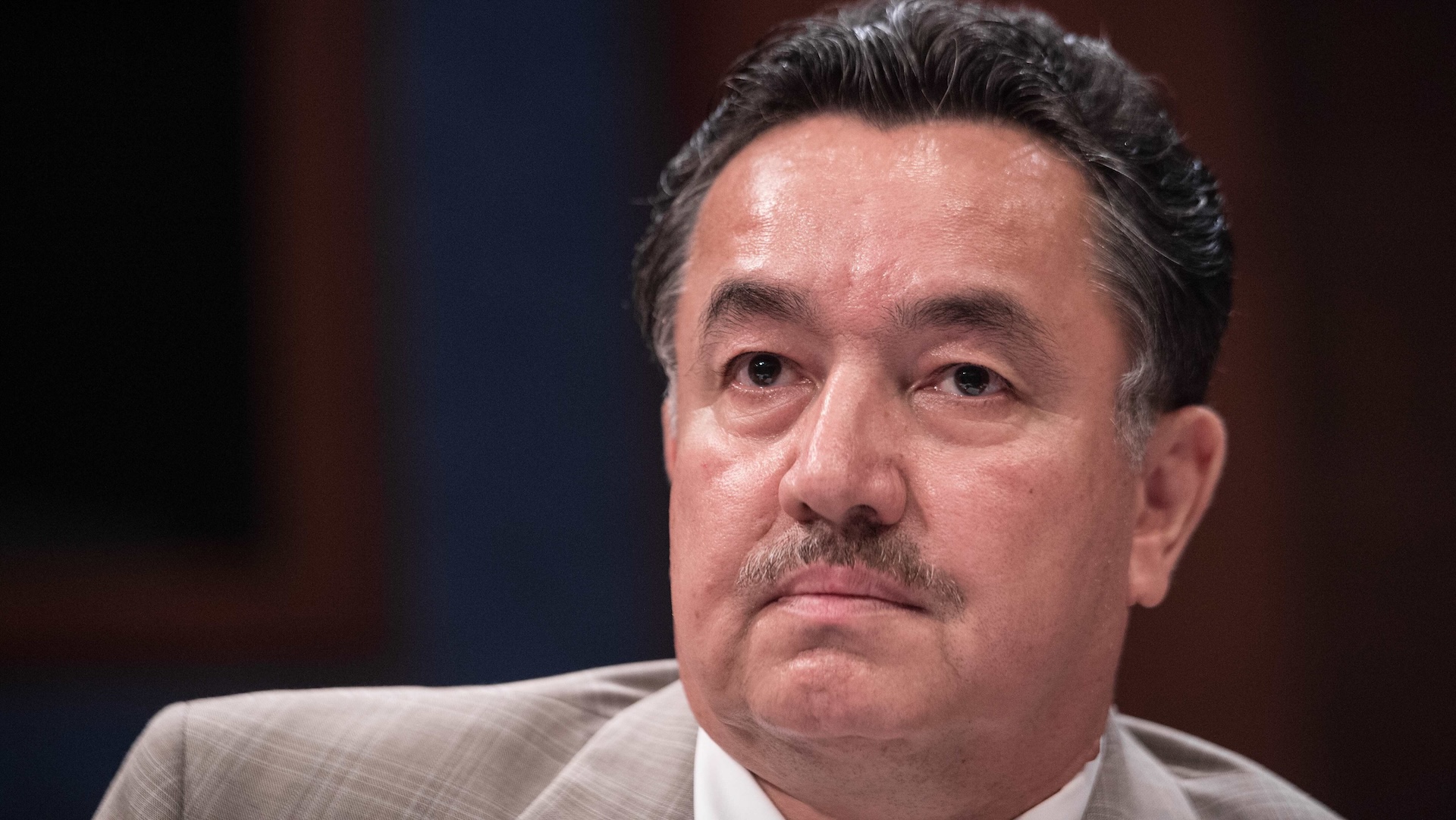
It was during this period that Zhang’s influence grew at the bank.
A native of Heilongjiang, China’s northernmost province bordering Russia, Zhang studied agricultural science before attending college in Canada. He then moved to the U.S., where he earned a business degree and worked for Hewlett-Packard. Zhang returned to China, and his international banking career took off. After a stint at Goldman Sachs, Zhang headed Deutsche Bank’s China unit from 2001 to 2010, and he used personal connections with the family of then Premier Wen Jiabao and other high-ranking officials to help secure lucrative deals for the bank. They included the bank’s role as one of the coordinators of ICBC’s historic listing on the Hong Kong stock exchange in 2006. Deutsche Bank colleagues called him “Mr. China.” (ICIJ contacted Deutsche Bank, which declined to comment on the matter.)
When ICBC poached Zhang, he became the first executive of a foreign firm ever to land a senior position at a Chinese state bank.
In announcing his abrupt departure in 2018, ICBC cited “family reasons.” Zhang went to work for a private equity firm. But in 2023, he emerged as a prime target of Beijing’s anti-corruption campaign; authorities were investigating allegations that, while at ICBC and later, he had accepted bribes and taken advantage of his political position to provide loans in exchange for personal gain.
Gold coins, fancy phones and funds of unknown origin
While China’s anti-graft agency was publicly investigating Zhang, ICBC’s headquarters privately prepared a confidential report that painted a damning portrait of the bank’s internal governance globally.
Written in Chinese, the eight-page report, which summarized the findings of inspections at ICBC’s overseas entities, outlined 16 main issues of different levels of gravity. Many branches, for instance, lacked staff with expertise in sophisticated market instruments, leading to limited deals, inaccurate records and financial losses, it said. More worrisome was a widespread failure to weed out employees who had committed potentially criminal acts or failed to properly screen clients or comply with anti-money laundering regulations.
Some units “have employees repeatedly depositing large sums of funds of unknown origin on behalf of clients, conducting unauthorized business transactions, and approving obviously suspicious mortgage loans,” the report said, without specifying the unit at fault. “Some institutions have failed to adequately monitor and manage employees’ abnormal behavior, leading to cases such as employees embezzling client funds.”
ICBC managers also worried that overseas units were squandering the bank’s own money.
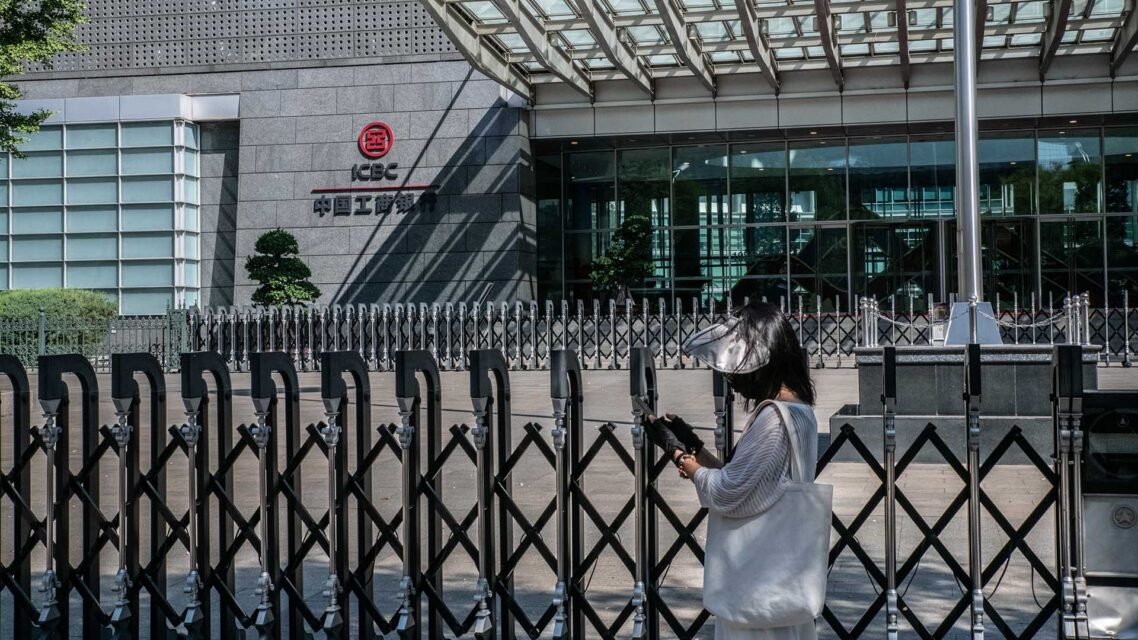
The internal report said that some units failed to keep their financial books in order, had mismanaged assets, or were found to have had discrepancies between their records and actual inventory of office furniture, computers and “other fixed assets.” Some units had “purchased gold and silver commemorative coins as promotional materials in violation of regulations,” it said. Others wasted “tens of millions of yuan” in rental fees for empty office space, expensive cellphones and membership fees for unspecified “high-end venues” for managers.
Governance problems affected low-ranking employees as much as those in leadership positions, the report said. Some low-level staffers had provided falsified résumés.
Meanwhile, senior managers of some subsidiaries failed to properly supervise their subordinates and enjoyed “high salaries and significant power but bear little responsibility.” “[W]hen risks materialize, they simply ‘walk away,’ ” the report said.
Beijing executives sent the report to dozens of employees in more than 40 countries, from Mexico to Australia, with a pointed message: “We ask that all branches take this matter very seriously.”
The key performance indicator for the people who were sent abroad was not to be clean [and] beyond reproach … It was to secure China’s interests, to secure new growth markets, to grease the wheels if they needed to. — China expert Katja Drinhausen
Katja Drinhausen, a China politics expert at the Mercator Institute for China Studies, Europe’s largest think tank focused on the Asian superpower, said that the Chinese financial sector has a “legacy of quite wide-ranging opportunities for self-enrichment.”
“The key performance indicator for the people who were sent abroad was not to be clean [and] beyond reproach when it came to their administrative and financial handlings,” Drinhausen told ICIJ. “It was to secure China’s interests, to secure new growth markets, to grease the wheels if they needed to.”
Chinese regulators have become more active in the fight against corruption. But their capacity is largely absorbed by domestic cases, leaving overseas misconduct allegations on the back burner, Drinhausen said. Considering the bank’s size and global presence, she added, it may fall to the countries where ICBC operates to supervise it and hold it accountable.
Zhang’s case came to a head last year when a court in Hangzhou found the banker guilty of taking bribes worth more than $24 million between 2011 and 2022 and sentenced him to death.
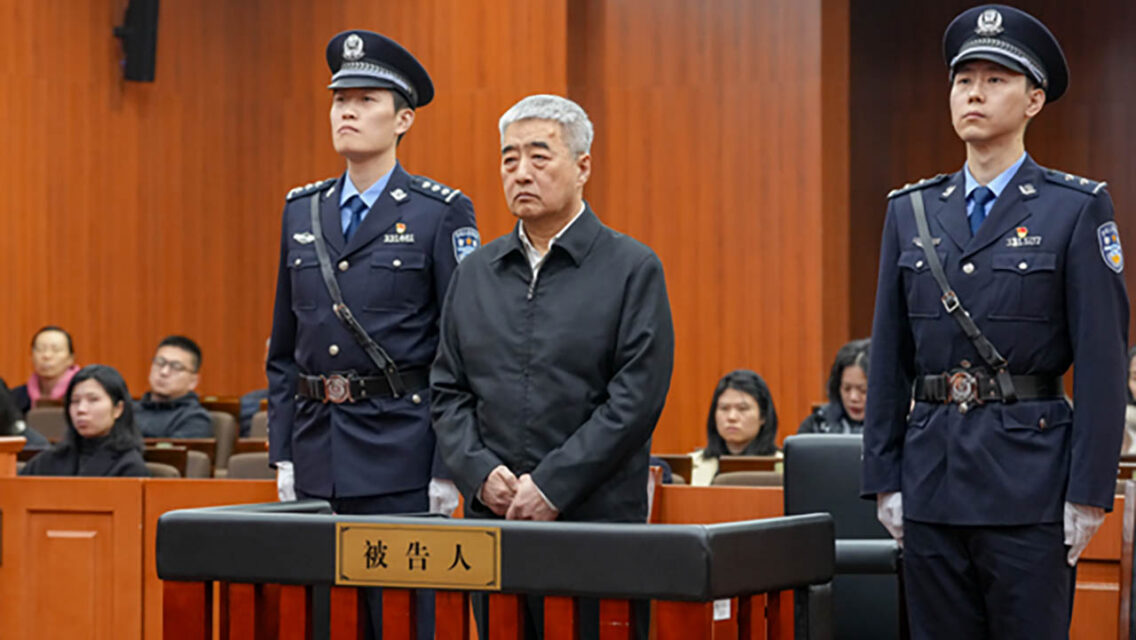
The court suspended the sentence for two years because of his cooperation with the authorities. He was expelled from the Communist Party.
Contributing reporters: Jelena Cosic, Jesús Escudero and Delphine Reuter