
PARTNER STORIES
China Capital stories reveal how ICBC advanced China’s political goals across four continents
ICIJ’s media partners uncovered strategic deals and moves the Chinese bank made around the world to further the political priorities of the party-state.
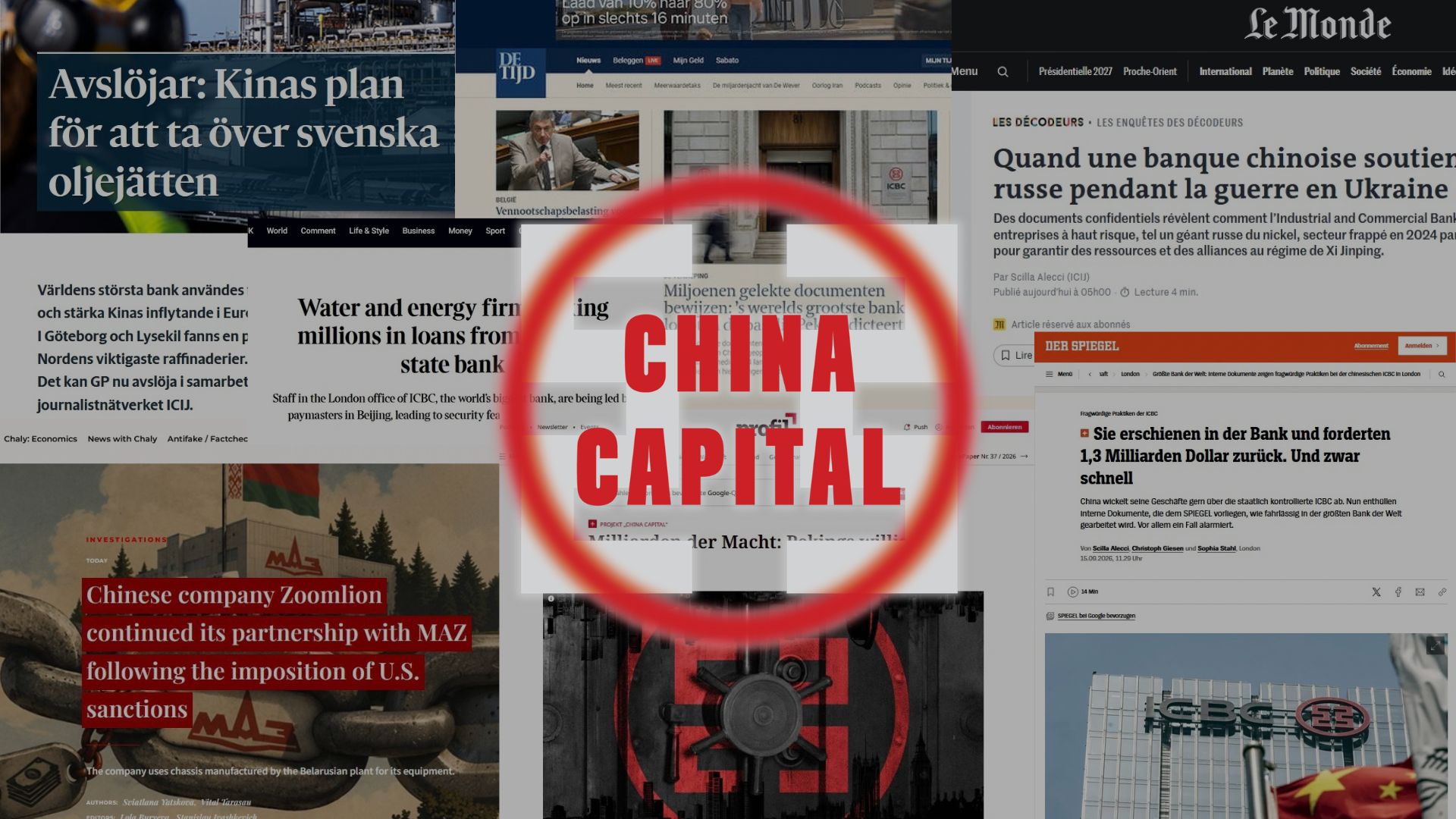
China Capital, an investigation by the International Consortium of Investigative Journalists in collaboration with 23 media partners, provided an unprecedented look into decision-making at the Industrial and Commercial Bank of China, one of the most powerful Chinese institutions, at a time of China’s ascendance on the world stage.
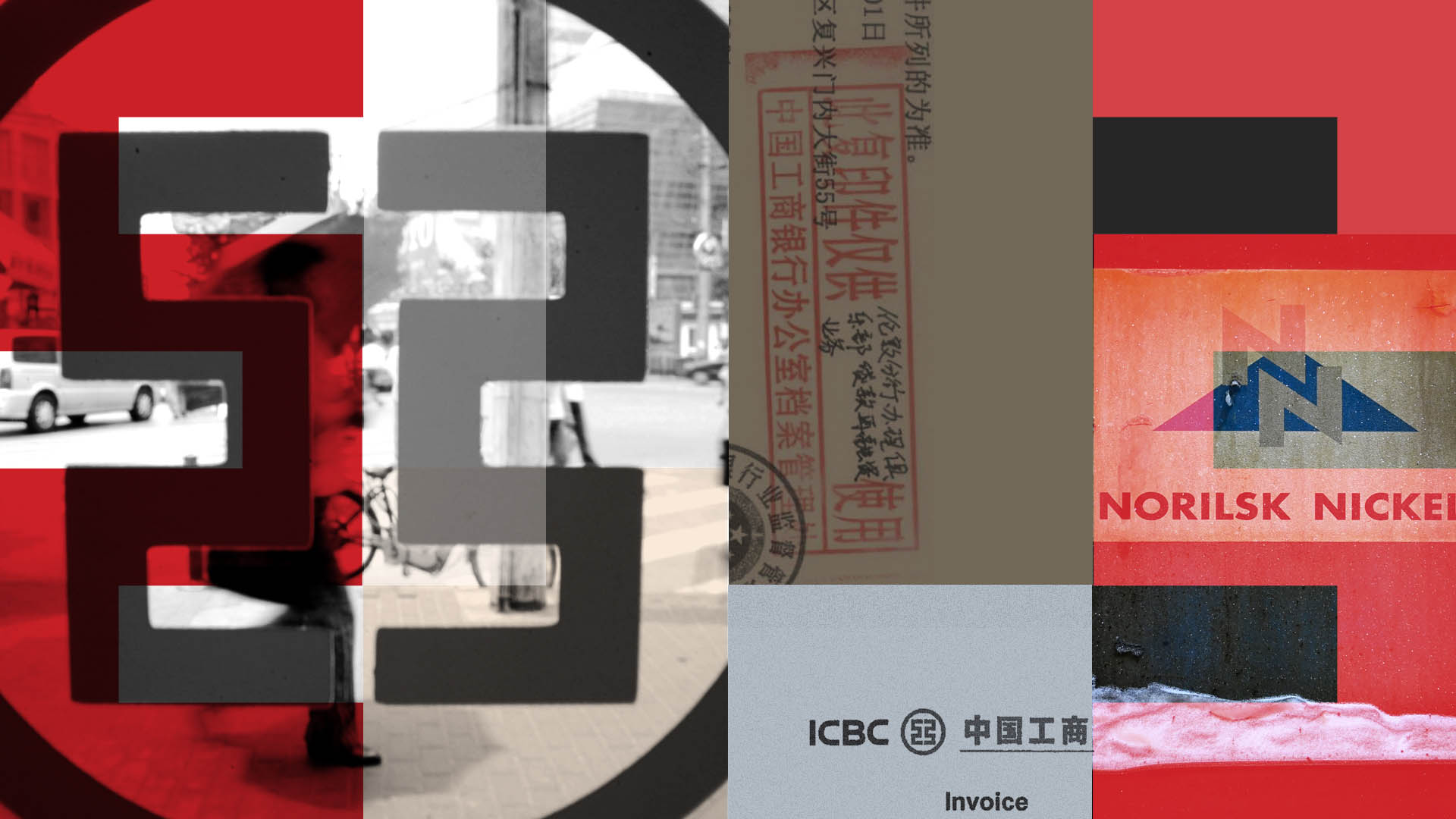
The investigation is based on more than 4.8 million confidential records from two of ICBC’s U.K. units. The records provide rare insight into one of China’s most important financial arms, showing how the government’s influence and political priorities often outweigh ordinary banking protocols.
This is the first time that an international team of reporters has examined the inner workings and lending practices of ICBC– the world’s largest bank by asset size. Like many of its state-owned peers, ICBC is notoriously secretive.
“The ICIJ investigation shows how branch structures can be leveraged by foreign bank headquarters to override local compliance officers when state-backed corporate interests conflict with local regulatory obligations,” said David P. Weber, an accounting professor at West Virginia University and former Chief Investigator of the U.S. Securities and Exchange Commission. He urged regulators in the U.S. and the U.K. to implement a cross-border enforcement mechanism that could “reduce oversight fragmentation.”
From New Zealand to Mexico, the 75 journalists who participated in the investigation uncovered previously unknown details about the bank’s involvement in some of their countries’ most important infrastructure projects and natural resources companies, as well as deals with firms linked to China’s military apparatus. Here are some of the revelations they uncovered.
The bank did not respond to reporters’ requests for comment.
How ICBC blended commercial interests with China’s political priorities
ICIJ’s partners across India, New Zealand and Austria found repeated instances where the bank’s political role blended with its commercial interests.
In 2017, Indian and Chinese troops reached a stand-off in the disputed Doklam region at the two countries’ borders, after the Indian government accused Beijing-backed companies of building roads in a territory claimed by China and Bhutan, in violation of a 1980 treaty. The two-month face-off didn’t just have political repercussions, The Indian Express, an ICIJ partner, reported. It also triggered actions inside ICBC’s Mumbai branch, more than 1,200 miles south of the border.
Soon after the news reached the bankers, ICBC “suspended the disbursement of 11 approved but undisbursed loans and bond investments totalling $185 million,” according to internal records. The bank also “organized” Chinese Communist Party members across every department to stay in constant touch with China’s embassy and consulate. The incident exemplifies the bank’s tight links to the party-state and how geopolitical events can influence its lending operations around the world.
Like most Chinese companies, ICBC has a Communist Party committee, an internal cell that ensures its operations advance the party’s interests, and some bankers were internally referred to as “comrades.”
In New Zealand, The Post reported that a Communist Party member who worked as a senior executive at ICBC’s Auckland outpost handled the local accounts of Hikvision, a Chinese surveillance tech company with links to the government. Numerous investigations by researchers and journalists have documented how, since at least 2017, Hikvision has provided surveillance technology to forces in Xinjiang, the Chinese region where Xi Jinping’s government has waged a repression campaign against hundreds of thousands of Uyghurs and other Muslim minorities. In 2020, the U.S. government blacklisted the firm for enabling human rights abuses.
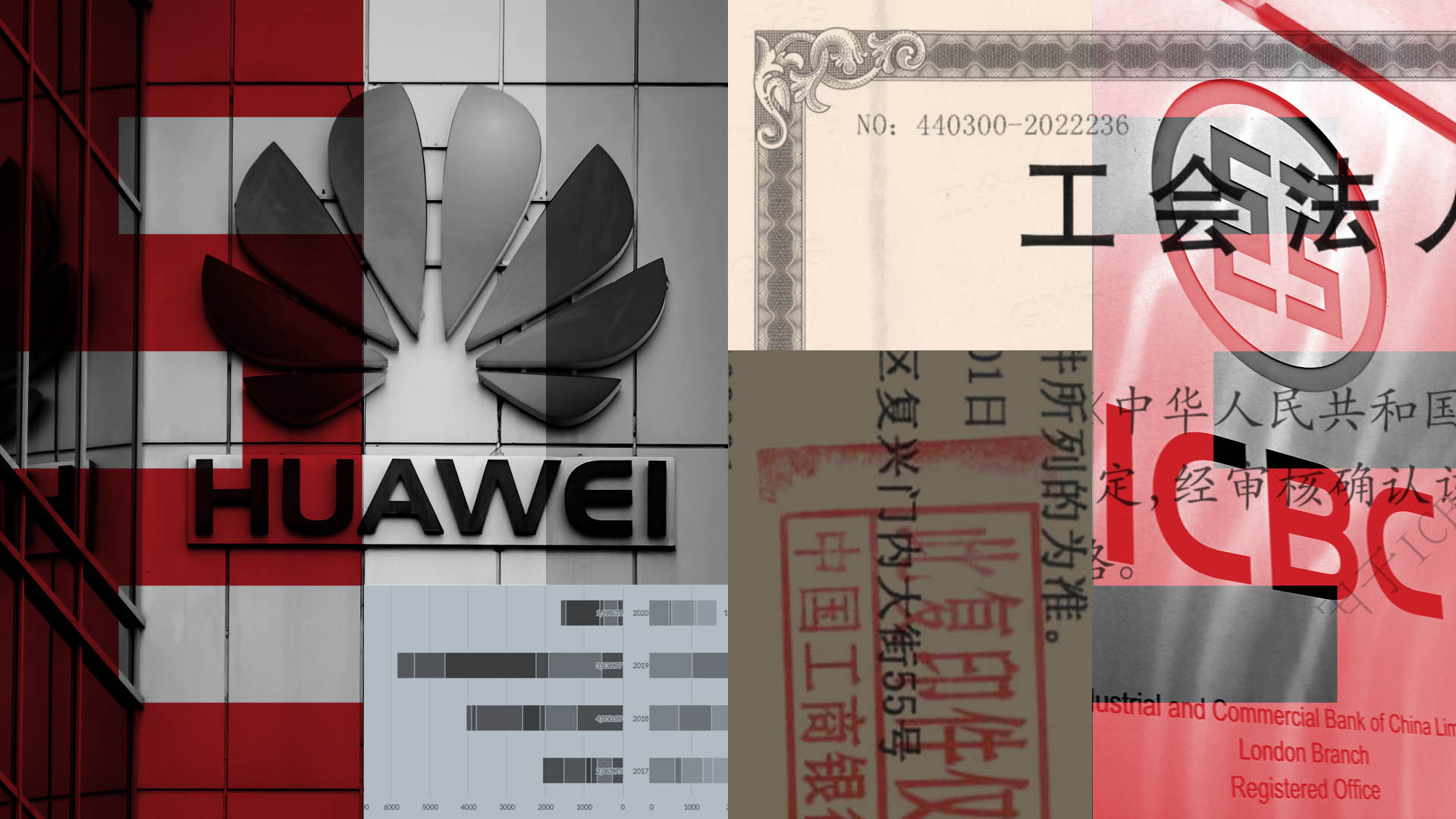
Internal ICBC records describe how Lu Ping, the chief marketing officer of the ICBC subsidiary in New Zealand, “exhibited the outstanding qualities of a communist party member.” “Comrade Lu Ping” was nominated for a company-wide commendation in 2022 for his proactive role “fulfilling cash management needs” in New Zealand for Hikvision and Huawei, one of the bank’s most important clients.
China Capital also uncovered secret links between one of Austria’s most important aviation companies and a top Chinese producer of military aircraft. ICIJ’s partner in Vienna, profil, examined internal 2021 memos that discussed a $230 million loan to Future Advance Composite Components, which is affiliated with the state-owned Aviation Industry Corporation of China.
While FACC, as the firm is known, publicly states that it produces aircraft parts exclusively for the civilian market, its Chinese owner has an “absolute leading position” in China’s defense industry and is the “sole manufacturer of all kinds of military aircraft and airborne equipment” in the country, according to the records.
ICBC bankers also discussed the possibility that the U.S. government could sanction AVIC in the future due to its links to China’s military apparatus. Though some London officers opposed extending the loans due to risk management concerns, they left the ultimate decision to ICBC’s Beijing headquarters. The documents do not state whether the bank approved the loan. AVIC did not respond to inquiries from profil.
Strategic deals revealed across Australia, Ghana, Belgium, the UK and Sweden
As part of China Capital, reporters also examined hundreds of credit application forms and other records that partly explained why ICBC London would want to pursue a deal. The documents revealed the geopolitical nature of some loans.
In Australia, ICBC issued “loss-making or marginal loans” to some of the country’s biggest resources and infrastructure companies, including Rio Tinto, Fortescue and Glencore, as a way of starting long-term relationships that would help advance Beijing’s political goals, the Australian Financial Review found.
The documents show how in 2015, Andrew Forrest, the billionaire CEO of Fortescue, an iron ore miner, made an emergency trip to Beijing to meet with ICBC’s chairman and seek assistance after the company was forced to cancel a $2.5 billion bond issuance because of unattractive interest rates.
Fortescue was struggling financially, but ICBC’s Sydney branch implored the Beijing headquarters to approve the loan at rates close to 30% below those offered by bond investors in the U.S., AFR reported. An internal memo cited Fortescue’s “significant strategic importance for the Chinese steel industry.”
ICIJ media partners in Ghana found evidence of loans awarded for similarly strategic reasons.
Ghana Business News reported how ICBC continued to provide hundreds of millions of dollars to the Ghana Cocoa Board, a government entity that supports and controls the production of cocoa — an important commodity — even though the company lacked transparency and was on a watchlist of borrowers in financial distress.
According to internal records, China stood to benefit from financing the firm, also known as Cocobod, since Chinese trade companies were key buyers and the deal helped cement the political alliance between Beijing and Accra. ICBC’s Brussels branch also participated in the loan to Cocobod, De Tijd reported, suggesting that the overseas units often helped each other when the clients were considered strategic for the bank and the party-state.
ICBC acquired a key role in the China-Africa trade thanks to its 19.7% stake in South African banking giant Standard Bank, The Africa Report found. Chinese authorities have approved the two institutions as joint renminbi-clearing banks — an arrangement that is expected to ease transactions in the Chinese currency across 19 countries where Standard Bank operates, the report said.

The Chinese bank also financed key energy projects in Europe. In the U.K., The Times found that ICBC issued nearly $1.7 billion in loans and borrowing options to U.K. water and energy infrastructure companies, including some that were “highly leveraged, with private owners borrowing heavily against relatively guaranteed incomes to maximise dividends.”
This model could leave water companies at risk should disputes arise over the debts, The Times reported. According to one internal memo, ICBC London’s ability to participate in wind farms financing was “strategically important in order to remain relevant in the UK renewables sector”.
The revelations prompted a debate in the British parliament, with some members of the House of Lords raising concerns about Chinese ownership of water utilities and key local infrastructure.
ICBC also showed an interest in financing Sweden’s top oil producer, Preem, the Göteborgs-Posten found. Internal records show how the bank offered loans to the company, a long-term client, in order to benefit Chinese oil companies and obtain access to Preem’s technology. In an internal document examined by ICIJ’s Swedish reporting partner, a banker noted that the deal allowed ICBC to gain insight into technology used for refining waste oil from cooking and forest biomass into premium oil products — a process of particular interest to China.
Serving Russia’s allies
China Capital also exposed how ICBC used its London operations as a financing hub for companies linked to sanctioned Russian and Belarusian business owners even after Western countries imposed financial sanctions to dent Russia’s military operations in Ukraine.
ICIJ and the Belarusian Investigative Center reported how ICBC London’s clients included a U.K. subsidiary of Zoomlion Heavy Industry Science and Technology, a Chinese construction company. Zoomlion used the subsidiary to partner with Belarusian state-owned company MAZ and build an industrial park near Minsk. The partnership continued even after the European Union and its allies sanctioned MAZ over its ties to Alexander Lukashenko’s regime.
MAZ left the joint venture in 2023, after the U.S. sanctioned the Belarusian firm, but devised a plan to continue supplying heavy vehicles to Zoomlion through an unsanctioned party, according to records obtained by the Belarusian Investigative Center.
MAZ didn’t respond to reporters’ questions. Zoomlion told ICIJ that the company and its subsidiaries operate in compliance with all laws and regulations.
In the Netherlands, Nout Wellink, a former supervisory board member of ICBC who left his post shortly after Russia invaded Ukraine in 2022, questioned the bank’s compliance culture, according to Het Financieele Dagblad. The growing pro-Russian stance within the Chinese government caused him unease during his nearly four-year tenure on the bank’s supervisory board, Welling said, according to ICIJ’s Dutch media partner.
“I don’t have a clear enough picture of the extent to which international sanctions are also being internalized within the bank,” he said. Speaking to a Dutch radio show, Wellink said that the bank is, “to a certain extent, an instrument of the Communist Party.”